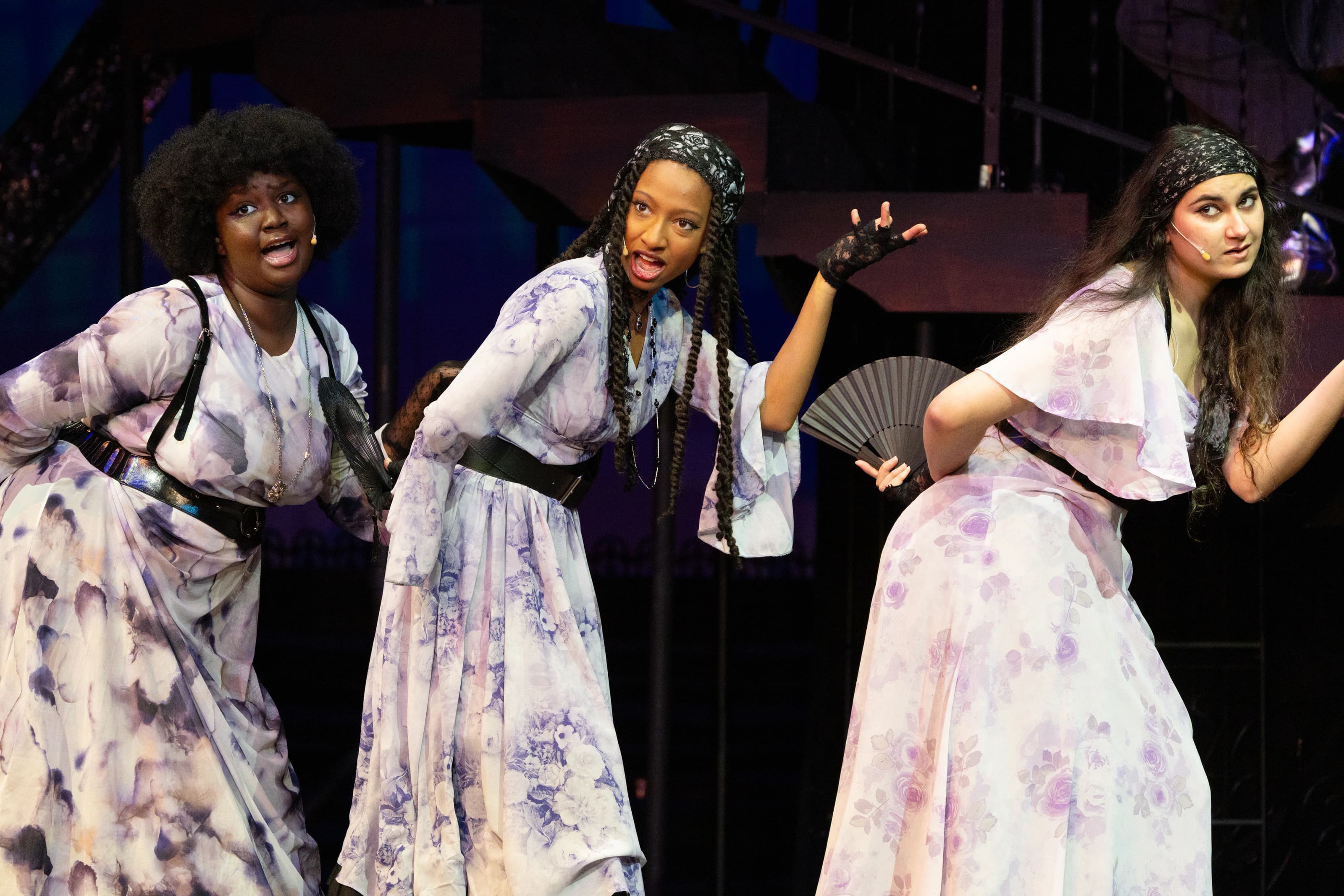
One of the more boisterous productions of this year, Hadestown kicked off with a wonderful start on November 13th, 2025. This musical–a retelling of the Ancient Greek mythical love story of both Persephone and Hades, and Orpheus and Eurydice–was as tragic and thrilling as I had expected it. Weaved into song and dance, the symphony of such an old tale, and a pairing's love through hardship is a classic drama that never gets old. This adaptation story embeds various political themes via the coal miners and signing away one's livelihood for necessities, a point that I particularly enjoyed beyond just the obvious plot. It seemed particularly relevant for today's climate, where one can find themselves resembling a lost soul in Hadestown, unable to see what has become of themselves and the world, and expectantly fall into the cycle of suffering. But, as the hopeful ending suggests, love and purpose can be found even in the depths of suffering, proving to be a plot that many found enjoyable.
As far as the planning of such an intricate play, Victoria Kirkham ’26, a part of the Greek Chorus, explained, “we alternate between learning music and blocking or choreography, and considering this is a music-heavy show, we did a lot of music work.” Beyond the singing, Phoebe Zhang ’26, one of the Shadow Fates, recalled the taxing effect the play had on her: “this was a show with a lot of ensemble pieces, so this was a show that I had to put the work into.” During tech week, the latter stage of production, was when most of their hard work paid off, and both dance and song elements were practiced together as they would be during the final performance.
The spinning center piece (the set’s main focal point) and moving lights were particularly exciting as they sufficiently captured the audience in the moment, making one feel enveloped by the stage. Hadestown also included a live band on the right side of the stage, an element that I particularly enjoyed, as it aided in bringing the show to life. In truth, the play definitely had an air of professionalism that highlighted all the effort from the staff, tech crew, and cast.
That being said, the main hiccup in the resounding applause was whispers among the student body of the mandatory Class I and II Matinee being an unnecessary requirement. Past editorials from the Paper and general sentiments across various faculty and students suggest that it is no secret that the first semester does present a lot of lost class time. I can echo some disappointment with having lost valuable class time; however, I do find it important to give more space for the arts to be accessible to all students. In particular, Carmelle Jagaselvan ’26 expressed issues with being unable to attend “if it were not the mandatory time set for just the play.” Zhang also felt the mandatory matinee as a relative plus: “I think it’s good for us actors because we are forced to put on our best performance knowing that either our whole class or upperclassmen are watching us. Also, with the house being full, we feed off the energy that the crowd gives.” Kirkham ’26, however, does understand the points being made that “some people may think it's just another mandatory school event.” Considering past issues with audiences being rude during mandatory viewings of shows, they rather, “everyone attending actually [wanting] to be there, and that forcing people doesn’t give them that choice.”
Regardless of the issues regarding the matinee, the applause was still significantly positive and truthfully reflected the value of the play. It was a lovely break, at least as a senior, from the laborious school day, and it left a lasting impact for a 2-hour high school production. I would encourage students in the future to take this as a reason to venture into the theatre more often and engage with more productions.