Opinion

Everyone Needs To Try Community Engagement

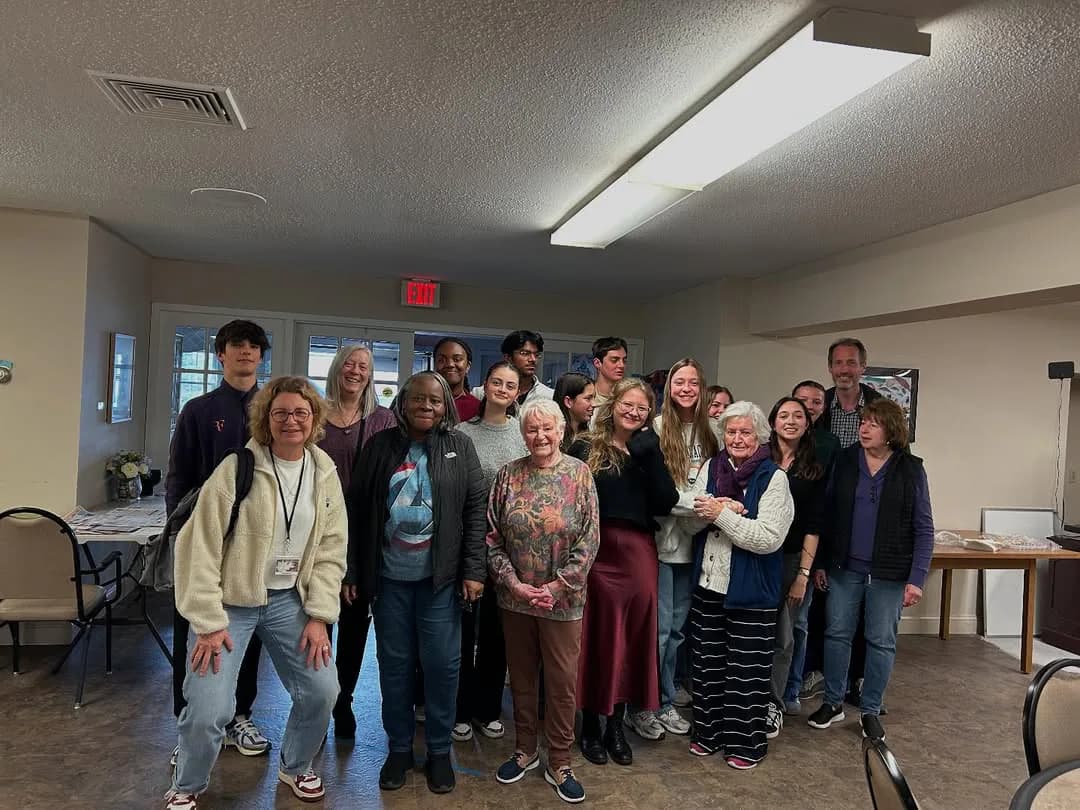
Every Sunday in early May, joy emanates around the track. Rather than a Mustang team clinching a pivotal win, the elation radiated from over 500 athletes competing at a Special Olympics event and the people who helped make the event happen. Volunteering at the Special Olympics turned out to be one of the most rewarding afternoons of my entire freshman year. Ever since, I couldn’t help but wonder how different my freshman year would have been if I had volunteered sooner. Should Milton have made me volunteer?

Source: ma_communityengagement

We Must Stop Chasing Prestige

In the 1970s, one in twenty Harvard graduates went into finance or consulting. In fact, the fields of finance, consulting, and technology combined accounted for 53% of Class of 2025 careers. Princeton University similarly produces around twenty management consultants per thousand graduates. Elite colleges are pipelines to such careers, and that is no coincidence. More importantly, elite schools like Milton serve as the first stage.

Nostalgia Costs Us

Humans have a desire, concealed by daily routines and eclipsed by the pressure of the future, to revitalize a past version of ourselves. Nostalgia fills tedious ceremonies like graduation with verbose speeches tangled in youth ful memories. While listening to these speeches, I cannot prevent nostalgia from seeping through my own memories and controlling my mind.

Student-Faculty Discussions Would Create a More Open, Unified Community

At Milton, the importance of speaking is rarely underestimated. Take most Monday and Friday mornings as an example. A plethora of student and faculty voices at Upper School and Class Meetings greets us, with each voice sharing and promoting various engaging opportunities here at Milton. But where speech has the power to inform and to persuade, discussion has the power to compromise and thereby create change in our communal expectations.

Minimize Mandatory Homework, Maximize Optional Learning

With his head collapsed over his elbow on the Harkness table, my friend naps during class. His eyes, which he forced to remain open late into the previous night, close. As he sleeps, a sixth of the material for our new unit whizzes by. “What are we doing?” asks my friend after he sees the worksheet before him.

Let Us Normalize Amateurism

During icebreakers, we often share our interests. “I sail.” “I like to play chess.” “I solve math problems in my free time.” Think back to the icebreakers that happened at the beginning of the year when everyone in your class took turns telling each other a few quick things about themselves. When someone said they loved doing something, did you automatically assume that they were skilled at it? That they’d had years of experience engaging in their passions? Upon hearing people list their hobbies, I myself have frequently made that assumption. Have you ever stopped to wonder why that assumption even takes shape in our heads in the first place?

Nic Lau '28

Advocate Against Attacks on Women’s Reproductive Healthcare

Access to reproductive healthcare, once federally protected under Roe v. Wade, is now over 300 miles and three days of lost wages away from most low-income rural areas. Beyond the headlines of total legal bans, the strategic defunding and disappearance of healthcare infrastructure are eroding reproductive rights. In cutting Title X grants, blocking ways to get accessible abortions, and driving away maternity centers and doctors, policymakers are ensuring that a safe pregnancy becomes a privilege reserved only for those in certain zip codes.

Compassionate Competition Shapes a Collaborative Community

According to the popular college-connection website Niche, over 50% of polled students and parents consider Milton a competitive environment, and reasonably so. Students vie for leadership positions, aim for higher grades than their peers, and generally look to “be the best,” whatever that means. Still, we feel like we don’t do enough—as The Milton Paper’s State of the Acad reported in 2025, 82% of respondents felt academically insecure at least rarely, despite 80.7% having an average grade of an A- or above. This imbalance begs the question: to what standards do we compare ourselves, and how should we set them?

Source: Adam Richins

Why “Jungle Primary” Hurts Massachusetts Voters

Last week, the Massachusetts Top-Two Primary Elections Initiative, which would dissolve all political-party primaries, passed the requirements to collect signatures to gain ballot access for the November 2026 election. The initiative would result in a single “jungle” primary—a primary in which all candidates run against each other at the same time, regardless of party affiliation—and only the top two finishers would advance to the general election. This change would impact state elections for governor, lieutenant governor, attorney general, and the state legislature, as well as elections for both houses of Congress. California, Washington, and Alaska have all adopted variants of this structure.

Allow AI on All Take-Home Assignments

You fear that when your teacher reads your AI-generated essay, sirens will go off. Rather, sirens should sound throughout our school to alert us to our unpreparedness for the AI revolution. To nullify AI-assisted cheating, help students develop AI-era skills, promote deeper human connections, and more effectively teach critical thinking, Milton should allow AI on all take-home assignments.

Source: @miltonacademy

Phone Policy is the Treatment, but Student Culture is the Cure

As Milton considers different versions of a phone policy—whether it includes stricter restrictions, phone-free classrooms, or designated usage times—we must ask a more fundamental question: will any version of a phone policy actually work? While limiting phone access may reduce visible distractions, it risks overlooking a deeper issue. Without a broader shift in school culture—particularly around student engagement—even the most carefully designed policy is unlikely to achieve its intended impact.

Milton Is Haunted By Ghost Clubs

Milton’s club landscape is overcrowded, with 106 options of clubs to sign up for on ClubHub, around 700 students in the Upper School, and only three Club Blocks. Such a landscape makes meaningful student engagement difficult. At the center of this issue is the prevalence of “ghost clubs”—organizations that never meet but remain officially registered, with club heads and club members having been registered as well. Furthermore, genuinely active clubs are forced to compete against affinity groups during the same scheduling blocks for attendance. This conflict puts many students in a difficult position of choosing between exploring a new interest or connecting with a part of their identity.

Chinese Research Universities Should Emphasize Quality over Quantity

Research-intensive universities provide crucial support for STEM innovation by attracting top scholars and supporting their scientific discoveries and core technological breakthroughs. Those breakthroughs then promote the creation of new fields and drive technological and economic development. In fact, a 2023 study by Scientometrics found that among winners of the Nobel Prize in the natural sciences, research universities accounted for over 60% of the institutions affiliated with scientists and over 70% of the individual laureates. With one of the largest education systems in the world, China boasts around 1,308 research universities as of June 2024. In addition, China’s research capacity has grown at an unprecedented pace, with Research and Development (R&D) investments surging dramatically to around a trillion dollars, surpassing American federal investments by around 20 billion dollars. In addition, the World Intellectual Property Organization (WIPO) Global Innovation Index ranked China 10th globally in terms of innovation capabilities in 2025. Nevertheless, reforms to university evaluation systems and even more support for specialized research universities are crucial to cultivating innovative talent and supporting scientific breakthroughs.

US History Oral Defense Does Not Prevent AI Use

”So… how was it?” “What did they ask?” In the past week, the sophomore section of the Stu was overflowing with one conversation: Milton’s new US History oral defense assessment. After a month of stressful research that culminated in a final paper, US History teachers announced this new addition to the assignment, which came as a surprise to students.

Source: Nic Lau '28

A Final Farewell from SGA 25-26

We want to start off by thanking everyone for the opportunity to serve on this year’s SGA and for putting your trust in us. It’s hard to believe that our time has come to an end. It seems like yesterday we were just preparing our speeches and reading them out loud in the ACC. We remember vividly how excited we were when granted our new roles; that sentiment has remained from when we planned our first event in the spring, Stang Skirmish, to when we planned our last Stables agenda.

A Final Sendoff: Ending My Senior Year with Seminar Day

While this past Tuesday April 28 was Class I’s last day of classes, filled with congratulations and reflective activities, the very next day, April 29, seniors came back together for the long awaited Seminar Day. The Public Issues Board organizes and produces this event every other year, bringing together speakers who may resonate with students’ interests and have impacted the local and global community. When looking through the list of speakers, I was torn between learning something new and gaining a deeper understanding of the subjects that I already cared about. From speeches about fashion to talks around AI, the selection this year—like all other years—was exceptional. In the end, I attended the session with Osaremen Okolo ‘13, former White House policy advisor and Harvard doctoral candidate who discussed her experience in public health, and then John Avlon ’91, a former CNN commentator who talked about American democracy.

Wary of Authoritarianism at Home, We Must Also Study Democratic Trends in Autocracies

“Are We Losing Our Democracy?” asks the headline of the October 31, 2025 New York Times editorial. We might as well apply the same question to nearly a quarter of the world’s countries. The Varieties of Democracy (V-Dem) Institute’s 2026 Democracy Report points toward that 25% of nations currently experiencing “democratic backsliding,” when a country undergoes a gradual erosion of its democratic values and progressively exhibits signs of authoritarianism. Concurrently, according to a 2025 Cornell University study conducted by Rachel Beatty Riedl et al., recent scholarly discourse has increasingly directed its attention from democratization to democratic regression.

Against the Backdrop of Antisemitism, We Must Celebrate Jewish Identity

I lied to my great-grandmother. Over spring break, my family went to Austria to ski, and I didn’t tell my 99-year-old great-grandmother, who had lived through the Holocaust and watched Austria’s Jewish community fall from a once prominent place in society to deportation, followed by death in concentration camps. Of course, she could not ever envision going on holiday there. Despite my great-grandmother’s inability to visit this place, a circumstance which evokes painful memories, I, born more than eighty years after her, could move beyond this narrative. I could carry the context of the past and remember what had happened there while still enjoying the trip.

Good Fridays Are Bad at the Academy

On most Fridays, I go to school just like any other student, preoccupied with my next test or homework assignment and happy to learn new math in class or eat lunch at Forbes. On one particular Friday, though, once per year, I could not feel more isolated from both the student body and my beloved hometown of Milton.

Source: milton.edu

My Injury Brought Me Closer to Our Community

At Milton, we find community and connection in many different ways. Whether through friendship, classes, clubs, teams, or dorms, community is an integral part of our school life, and I have always valued it. At the same time, our understanding of community is sometimes hard to see or fully grasp, especially when we are busy with schoolwork and other competing commitments. One day last November, I discovered that hidden strength in a way I could never have expected. I’ll spare the details, but I ended up with a broken ankle that required surgery going into fall break.

The Iran War: Tactical Success but Strategic Loss

Military victories are easy to measure, but strategic ones are not, and that distinction may define the Iran War. Since the Iran War began on February 28, the US has presented a myriad of scattered objectives in attacking Iran—from annihilation, to regime change, even to partial negotiation. Although the US’s sheer military power has severely damaged Iran’s offensive strike capability, instead of taking away Iran’s power, the US has essentially handed Iran strategic leverage through the Strait of Hormuz. As a result, as of April 13, more than a full month since the start of the war, we are in a tentative two-week ceasefire, and failed peace talks leave a very unclear path for how the US will proceed from here, despite the country’s clear position in the war as one of the most powerful militaries in the world.

Feminism Means Freedom, Not Criticism

We sometimes treat “feminism” as a taboo word, especially in today’s political environment. Although the term has historically referred to equal rights for all sexes, today, some often weaponize the term against women, accusing them of being “too woke” or “too conservative.”