On most Fridays, I go to school just like any other student, preoccupied with my next test or homework assignment and happy to learn new math in class or eat lunch at Forbes. On one particular Friday, though, once per year, I could not feel more isolated from both the student body and my beloved hometown of Milton.
Good Friday, which took place on April 3 this year, marks the Friday before Easter as the solemn day of mourning when Jesus Christ died following crucifixion, and every year, I trudge to school on this day of mourning with a heavy heart.
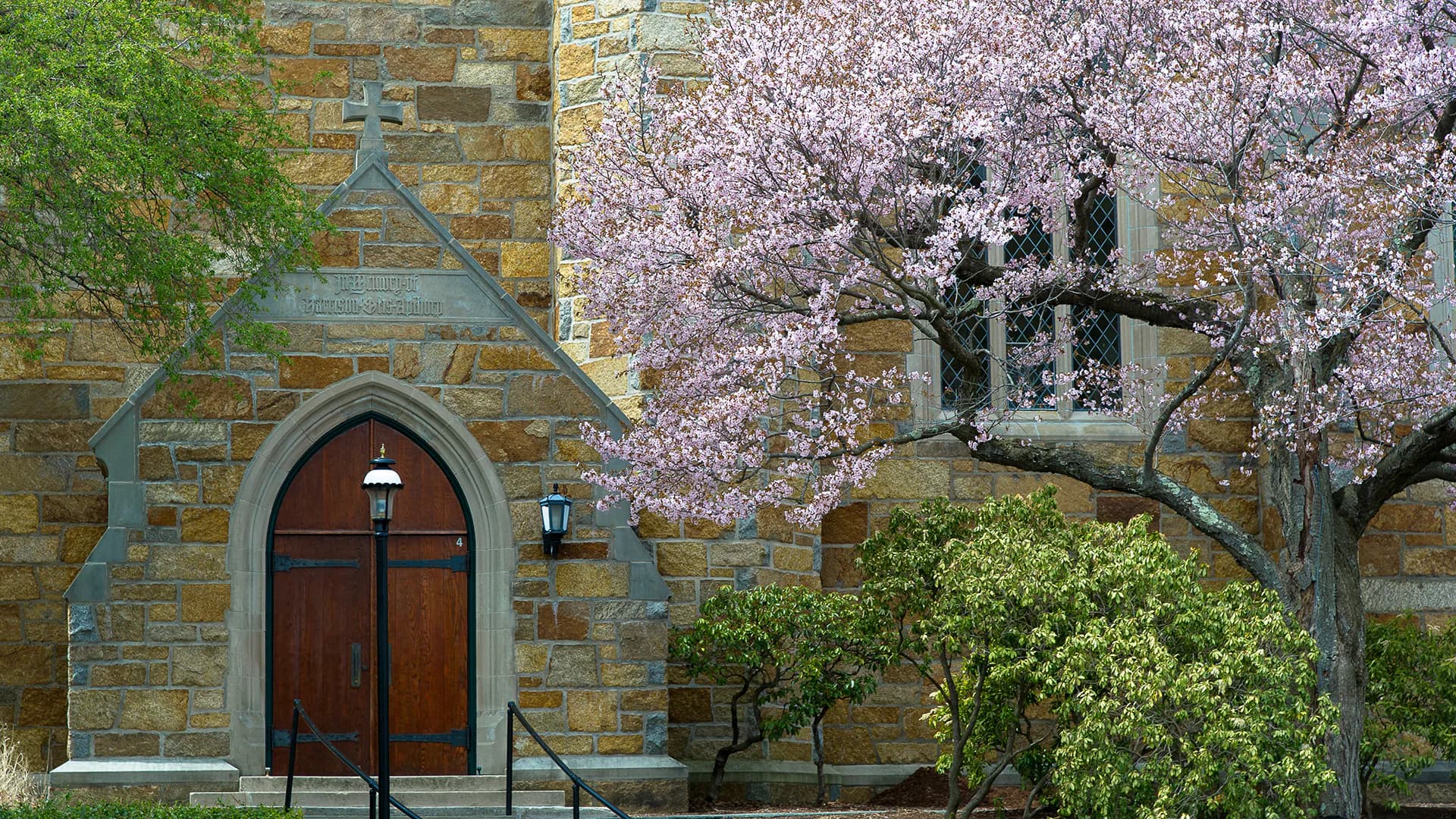
Dressed semi-formally in all black for morning prayers at church, I packed a different dress for the afternoon veneration of the cross and wore an oak rosary hidden under my black sweater in case I had a moment free to pray. After much internal debate, I mustered the courage to wear my Mary’s medallion and small cross on the outside of my sweater, visible to the world.
As I glided along Randolph Avenue in my Mazda to the hums of Catholic hymns playing faintly on the speakers, the clear roads only briefly shocked me before I remembered that Milton Public Schools (MPS) had school off for Good Friday—just like the bordering school systems of Canton, Dedham, Quincy, Braintree, and Greater Boston. The US stock market also closes on Good Friday.
With every Easter comes the familiar blistering shocks that I go to a school like Milton—not Milton High School, but its estranged half-sister Milton Academy—where I wince when people say “you have something on your forehead” on Ash Wednesday or ask me why I look sad on Good Friday.
I’m not alone: many other observing Christians at Milton also struggle with balancing the weight of religious duties with the constant stream of academic burden. Raphy Rufino ‘27, a fellow Catholic, also balances “Mass on Thursday, Veneration of the Cross on Friday, Saturday Mass, and Sunday Mass.” He believes that the school lacks “understanding of Good Friday—and Easter in general—as a holiday.” Shira Keitner ‘27 added that although she saw the Diversity, Equity, Inclusion, & Justice (DEIJ) office’s emails, she would “love to learn more about the history and have a school-sponsored educational [event] surrounding” the period of significance to “both Jewish and Christian people” as it contains the interrelated Holy Week and Passover. Similarly, Sammy Greer ‘27, a Protestant Christian, solemnly observes Good Friday but “would have celebrated more” if given the day off, citing a daytime service that he hadn’t been able to attend. In general, Greer believes that to give students sufficient time to both observe traditions and celebrate Easter, Good Friday or Easter Monday—and maybe both—should be a holiday.
Per the Pew Research Center, around 47% of the Boston area’s adult population is Christian, and according to 2025’s “State of the Acad” by The Milton Paper, an estimated 30% of the Milton community is Christian. While these numbers are relatively similar, the school seems to intentionally turn its eye away from this hugely locally relevant culture, failing to observe one of the most holy days of the year in contrast to local schools.
The Academy boasts great diversity and a multitude of different cultures that I am honored to have encountered, and this global mindset does not reflexively entail oikophobia toward the town’s culture: the “tendency to criticize or reject one’s own home or home society while praising others,” as Macmillan Dictionary defines. Nonetheless, it seems like the school takes constant steps to distance itself from the local community in which it is rooted—while we luckily enjoy many multicultural events like CultureFest and international trips to countries like Morocco and Japan, we ignore the holidays such as Veterans’ Day and Good Friday that virtually every local school observes. The Academy’s conspicuous decision not to align with these observances signals a disturbing ignorance of local culture and customs.
That official institutions such as the US stock market, MPS, or BPS continue to observe holidays like Good Friday or Veterans’ Day ensures the cultural inclusion of the local population’s majority, but the school ignores this key square in multiculturalism’s beautiful quilt.
In fact, the Academy exhibits an embarrassing double standard in holiday recognition between other religions or traditions and Christianity. No school is held for Lunar New Year or the High Holy Days—Rosh Hashanah and Yom Kippur, the two most important Jewish holidays in the year—despite the Christian proportion of the Academy’s population (30%) quantitatively paralleling the Asian (34.5%) and Jewish (9.3%) proportions as estimated by the 2025 “State of the Acad.” Of course, note that these percentages are not mutually exclusive as the groups intertwine.
Even as an elite private school, the Academy should not hold itself intellectually and culturally above its hometown by disrespecting its institutionalized celebrations of holidays like Good Friday. I plead with the administration to consider recognizing Good Friday as a day off like local culture does. Please, remember that Milton Academy is nothing without the town of Milton.
As Christian Fellowship Supervisor Akin Adeboye told me, the Fellowship is “in discussions with the DEIJ office” about potentially recognizing Good Friday as a holiday, and I’m so grateful to the club for fighting for what should be second nature to any school in Milton, private or public.
I hope that next Good Friday, I’ll be able to attend my dear church without missing part of math class, and I wish that next Easter, I won’t have to study calculus for three hours in preparation for a test. But for now, I can only continue slipping my rosary under my sweater and praying for energy as I study late at night after services.