I love the Winter Olympics. It’s extraordinary to watch athletes compete in ways that feel superhuman—flying, twirling and landing jumps in ways I could never dream of attempting.
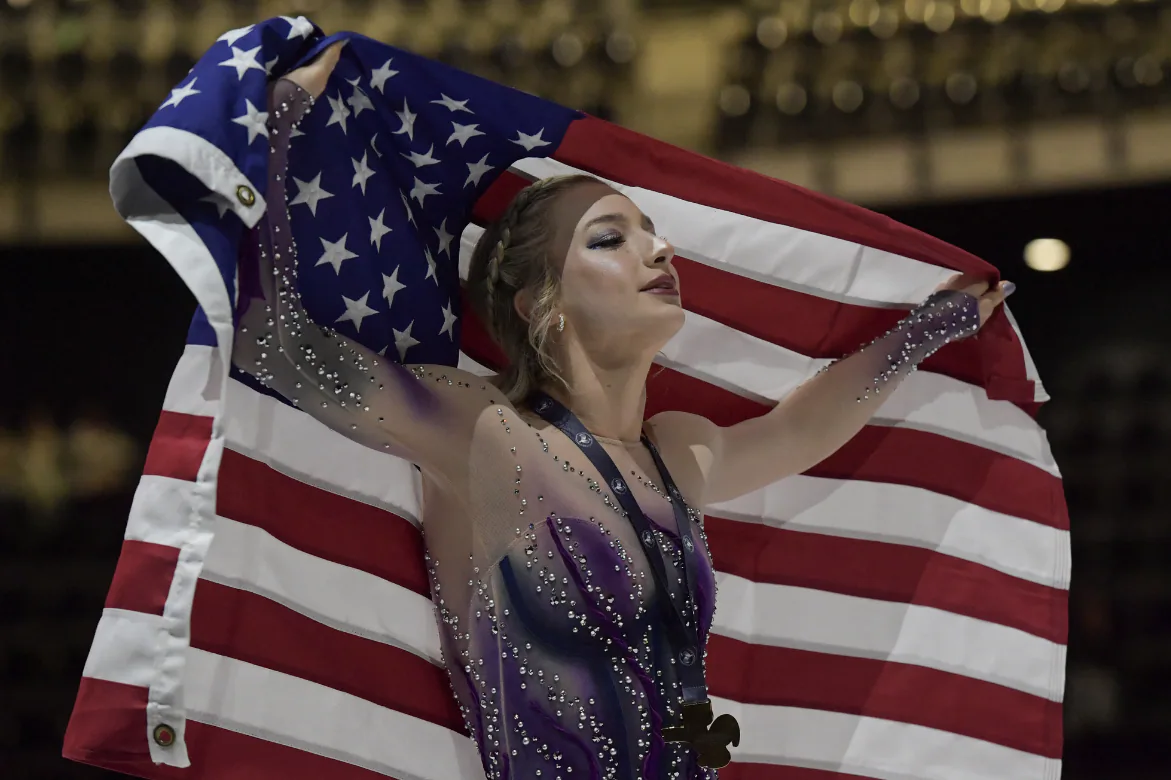
This Olympics, I see these competitors in three distinct ways. First, I see them as elite athletes at the top of their sport; all differences in background disappear as the spotlight celebrates talent while temporarily overriding politics. Second, I see them as ordinary people on social media as they share pins, squeal over free merchandise, and give informal tours of the Olympic village on Instagram. Finally, I see them as Americans exercising their right of free speech. Some Olympic athletes representing the U.S. have used their global platform to speak out against American politics and policies they disagree with. Olympic freestyle skier Hunter Hess, for example, said that he had mixed feelings about representing the U.S. during a February 6 press conference because there was “a lot going on that [he was] not the biggest fan of.” In a similar vein, U.S. Olympic figure skater Amber Glenn criticized President Trump’s policies on the LGBTQ+ community and his policies regarding Immigration and Customs Enforcement (ICE) on the world stage. There is something beautiful in the notion that American citizens not only have the right to free speech but also feel comfortable to exercise it in such a visible, international setting.
Nevertheless, even if they have this right, is it right for them to speak in this way at the Olympics? These athletes are at the Games as representatives of the U.S., not as individual citizens; they are diplomats by way of their craft. If they win a medal, they receive monetary compensation from the U.S. Olympic Committee. In essence, these athletes are employees of the nation. Would Milton Academy be delighted if faculty publicly criticized the school while at Nobles? While Ms. Stone and Dr. Callen might appreciate our criticism in the Measure, would they feel the same if we wrote scathing opinions in the Boston Globe? At the Olympics, this kind of disagreement could be a breach of an unwritten contract, but it could also be a quintessential part of being American.
The “political” nature of the 2026 Winter Olympics is not unprecedented; many past athletes have used the Games to comment on politics. During the 1936 Summer Olympics held in Berlin, African-American track athlete Jesse Owens won gold in the long jump and embraced “Aryan” German competitor Luz Long as a fiery political statement against Adolf Hitler’s ideology of racial separation. During the Summer Olympics in Mexico City, African-American sprinters Tommie Smith and John Carlos raised their fists in the “Black Power Salute” in 1968 to protest racial discrimination in the U.S. On one hand, I admire the courage of using a platform to emphasize the injustices others face. Yet the political stances of the current day can also feel, at times, like a breach of a sacred agreement that comes with shouldering the American flag at the international level. In the end, I do not fully resolve this tension.
What disturbs me is not that athletes speak out but that the line today between genuine responsibility and performative protest feels so thin. Jesse Owens’s historic embrace covered papers across the world, and we remember the momentous snapshot 90 years later. But today, in a world of 15 billion hours of social media content consumed daily, is a single tweet or interview sound-bite a meaningful act, or just an insincere attempt at political activism? This line is much harder to distinguish in today’s environment. These athletes have been entrusted with a platform. If their words are merely performative, their speech is an abuse of power from all sides: using a cause and their fifteen minutes of fame to elevate themselves. Amber Glenn has continued to use her platform to support the LGBTQ+ community; I can’t find another instance of Hess speaking out. If their passion is genuine, though, I would expect the same excellence in their actions as in their words for these extraordinary Olympians. I urge those taking political stances both on the international and on the domestic stage to show, not tell. Don’t just spit out a few words at a press conference or post a single social media clip; do something impactful. Donate your time, energy, and platform to the cause not just at the games but before and after. For now, as a spectator and a citizen, I am left to see on what side of that line they land their jump.