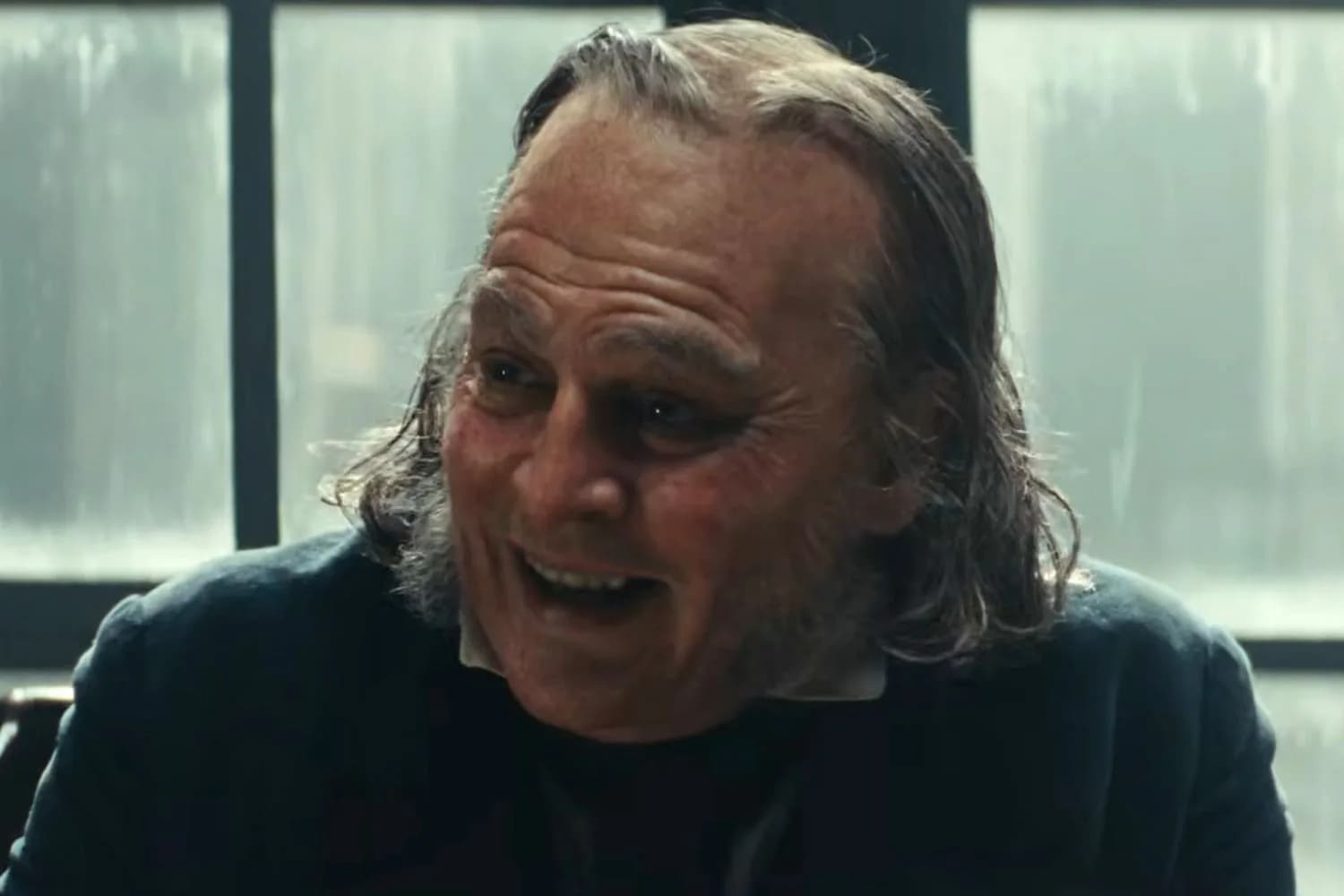
Ebenezer, the latest live-action film adaptation of Charles Dickens’s A Christmas Carol, directed by Ti West and released in theaters on November 13, 2026, offers an unconventional reinterpretation of the traditional Christmas story through a dark and gothic lens. The film holds an 89-90% audience score on Rotten Tomatoes and is rated PG-13 for frightening material. Paramount’s tagline claims, “the name you know, the story you don’t.” While West’s creative style brought a distinctive perspective to the haunting exploration of guilt, memory, and redemption, Johnny Depp’s casting as Ebenezer Scrooge added controversy to the film.
Ti West, known for his work in the horror genre, directed X, Pearl, MaXXXine, and many more films. Given his background in psychological and supernatural horror, his approach this time is unsurprising. In Ebenezer, West uses the visual motif of the flame's sudden disappearance as foreshadowing, building tension and suspense. It first appears before Jacob Marley’s death and recurs seven years later, before Scrooge’s supernatural encounters. The three spirits he encounters, which represent the past, present, and future, force him to confront his past experiences, the consequences of his present behavior, and potential results if he doesn’t change. West’s greatest achievement here is making these supernatural elements frightening not only through their appearances, but also through what they force Scrooge to face.
Another example of the meanings of imagery, pointed out by Michelle Yu ’30, was “the white hollow eyes of the Spirit of Christmas Past.” Yu found they “contributed to the fact that Scrooge’s past memories were rather blank.” Yu also found that “the two children in the Spirit of Christmas Present’s body” were able to convey “the danger of greed well.” Together, these elements helped Yu understand the “weakness of human nature.”
The story's darkness and horrifying elements strengthen the story. For instance, making Scrooge’s transformation more believable was not easy but a fruitful process. Yu agreed that “it was a genuine change.” The change in Scrooge’s beliefs and mindset was gradual. The frightening ghosts allowed his confrontation to be more emotionally intense.
I especially appreciated the Ghost of Christmas Past. As someone who has never read or seen adaptations of A Christmas Carol, I better understood why Scrooge became a grumpy, cold, and greedy businessman through the Ghost. Scrooge’s father was constantly drunk and didn’t treat him well. His sister was his only source of warmth and comfort, but she passed away at a young age. Scrooge worked all year and stopped appreciating what he had. As Belle, his former love, said, he was “living in the shadow and never saw the sun.”
While escaping into his past, acknowledging the journey that shaped him, confronting the vulnerability and regret surrounding his relationship with Belle, and ultimately recognizing the consequences of his present actions, Scrooge earns his evolution in the film. The intense horror at the start makes the warmth and compassion at the end more powerful. Yu mentioned how “the ending really stood out to [her] because [she] saw the significant change in Ebenezer Scrooge.” West effectively makes Scrooge’s gradual transformation towards understanding and redemption especially profound.
Beyond West’s reinterpretation of the narrative, Johnny Depp’s casting as Ebenezer Scrooge is also noteworthy. Ebenezer marks Depp’s first major Hollywood role since 2018, and his first since the controversial 2022 defamation trial against his ex-wife, Amber Heard. Depp is known for playing eccentric, unconventional characters, including Jack Sparrow, Edward Scissorhands, and the Mad Hatter. Depp used his theatrical style to portray Scrooge. His dark humor fits the gothic atmosphere, but his exaggerated expressions and mannerisms can feel overly deliberate, making certain moments feel less natural.
Tom Chatalbash, FilmSpeak’s chief film critic, praised the film as a “wickedly fun holiday treat and strong comeback vehicle for its star,” describing Depp’s performance as a “lively” one which “balances the goofy charm and emotional gravitas that has been sorely missed.” On the other hand, David Ehrlich, the Head Film Critic and reviews editor of IndieWire, called Depp’s performance “an advent calendar of empty affectations without a soul to anchor them, every shot full of face and bereft of feeling.”
Although the story’s style has changed and many elements have been added, Yu, as someone who has read the book and watched the original movie, found that this new version fits the book's description. Examples include the “portrayal of the last spirit” and “details of Robert’s family.” Most importantly, the film preserves the message of redemption and the original story's fundamental structure. The story has always been the same, but the way it's told this time is completely new.