In 2023, 34 days before her eleven-year federal imprisonment for defrauding investors, Theranos founder Elizabeth Holmes secretly invited filmmaker Nathan Fielder and his crew into her San Diego home. Her vision was to make a documentary about her full, transparent self, challenging the accusations against her. What spiraled out of this collaboration was not the innocent mirage she hoped to construct, but a manipulative tug-of-war production between Holmes and Fielder.
You Can See Everything, directed by Fielder and Lance Oppenheim, released in theaters on October 16 and grossed $64 million as of October 31, making it one of the most successful documentaries at the box office. A24, the distributor, will submit the film for Oscar nominations, including Best Picture and Best Director, at the beginning of 2027. On the screen, Holmes divulges the extent of one’s psychological machinations and challenges the intrinsic reliability and transparency of documentaries.
Holmes was the CEO of the now-defunct, formerly billion-dollar company Theranos, which allegedly made a device capable of running various medical tests with a single drop of blood. In truth, the device could only run a small range of tests and was slower than existing machines, but through careful manipulation, Holmes deceived investors to create what was once considered a revolutionary and inspiring company. In 2022, Holmes was found guilty of defrauding investors of hundreds of millions of dollars.
The documentary’s purpose was to paint her in a new, fresh light, while not necessarily ridding her of her “frauds.” Instead of absolution, the film also aims to showcase Holmes’s warmer side: a side where she spends time with her children and partner, and a life where she is just like every other mom. In this way, Holmes can draw sentiments of reevaluation of her character. In the documentary, she claimed she was misquoted in a New York Times article and critiqued the TV portrayal of herself: “They’re not playing me. They’re playing a character I created.” That scene alone is where Holmes and Fielder grasp and assess what she is really trying to elicit about herself. Is she really falsely portrayed by the media?
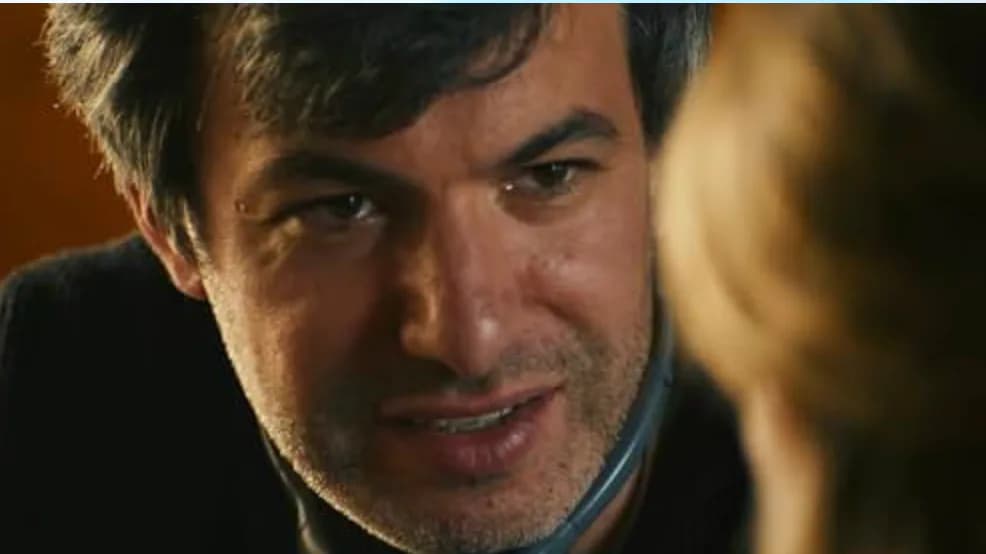
What makes this documentary unique is that the director himself is a part of it. Nathan Fielder is an active main character, and he knows what is captured on screen can be far from a candid picture. The usage of close-ups and music elevates the sense of skepticism around Holmes. There are scenes where Holmes interacts with her family but also scenes where she ushers cameras to capture her with her children. She tells Fielder repeatedly that she is not deceiving him and is misunderstood, while also portraying herself as inferior. On the other hand, Fielder tries hard and successfully captures the manipulation tactics of Holmes—but objectively or not is still in question.
Fielder explicitly states in the film that he has lied and left out key moments. Despite the title You Can See Everything, the audience can’t see everything. The film crew can shape what the crowds will see, but Fielder shifts the purpose of the film into challenging us to evaluate the film on our own terms while accepting that our own evaluative lenses can be flawed as well.
Holmes goes to jail halfway through the documentary, at which point Fielder collaborates with Amanda Seyfried, who portrayed Elizabeth Holmes in Hulu’s The Dropout, to dig further into Holmes’s character. This collaboration sparks a deviation from a traditional documentary to almost a thriller-crime movie. The narrative seems to shift into Fielder and Seyfried as protagonists against Billy Evans, the husband of Holmes. They find that Evans controls Holmes’s X account and made a decision to profit off of the documentary “without her knowing.” Just as the film settles Evans as the villain, a twist appears: Holmes actually knows about Evans’ controlling factors and continues to hold lots of trust and love for him. Fielder works out his emotions in this case throughout the film, intruding on the line of involvement he has as a documentarian.