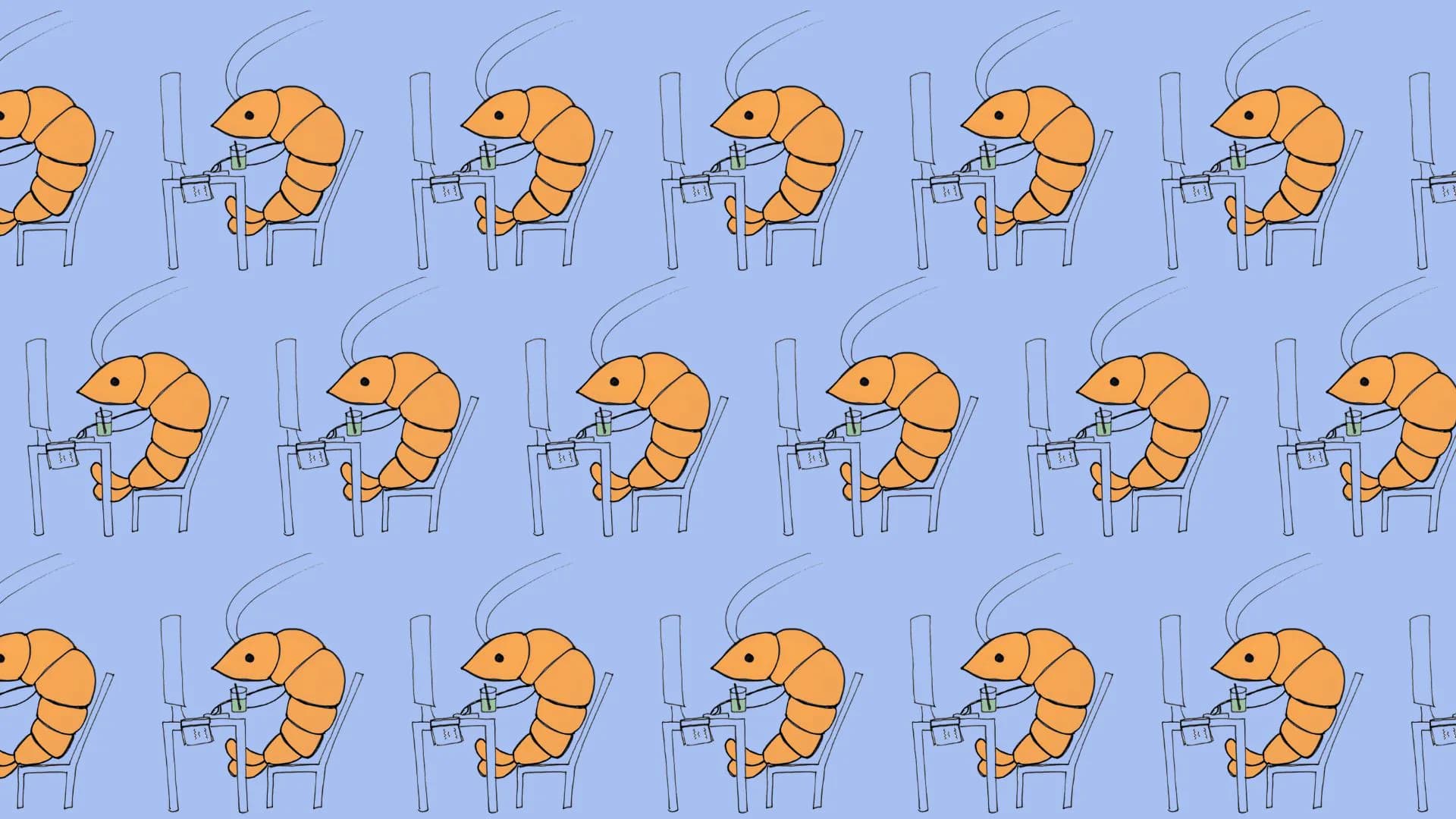
For players of Krillion, an online game where players seek to find the rarest answers to trivia questions, “São Tomé and Príncipe” has become a go-to response. Many of you likely haven’t heard of this country. But those who have recently been struck with a Krillion craze will be quite familiar. Countless Instagram videos use this “São Tomé and Príncipe method”: whether the prompt asks for a country bordering the Atlantic or the Indian Ocean, always answer “São Tomé and Príncipe,” hoping for the rarest rating of “One in a Krillion.”
This culture of quirkiness then becomes the new norm—the new conformity. Now, typing these “niche” countries into the answer bar isn’t as One in a Krillion as the game presupposes. Instead, these responses are the new, most basic “Plankton” of the game.
Of course, this self-differentiation can claim some benefits: it embraces creativity and sometimes even true self-expression. However, when we flirt with eccentricity only for the game, we conform to others’ rules and lose our true distinctiveness.
We develop an ego in traveling just to the edge of the difference that is allowed or encouraged by our communities. At Milton, this ego has become all too clear in champagne socialism, where rich or middle-class students parade anticapitalist ideals, or diluted activism, where community members champion trendy causes. We also see this elitism manifest in our academic environment, in which students seek intellectual distinction through uniqueness on research papers, mathematical projects, and science experiments.
After all, we are taught to be creative, to be activists, to speak out, to form our own opinions, to “Dare to be True.” But we are ultimately too scared to be different enough that we are weird or “in the wrong.” Some of this fear stems from a culture of not being truly open to other views.
In the 2026 State of the Acad, for example, 85.4% of conservative students answered they have felt the need to censor themselves due to their political leaning, while only 29% of progressives said the same. It is no coincidence that in a blue school in a blue state, conservative students—who made up 10% of the survey respondents—feel unable to express their views. In the same survey, only 4.5% of all respondents felt comfortable sharing politically controversial opinions at All School Programming, the very events that seek to teach us how to have civil discourse. When someone ventures out of a “quirky” sort of difference, we ostracize them.
This reluctance to speak up for fear of intense backlash is reinforced by personal experiences. Take the example of The Paper’s December 12, 2025 issue, where Tom Tang ’26 wrote an article titled “The DEIJ Dilemma” that described some of his Wolcott peers’ discomfort during programming as a result of their religious beliefs and the DEIJ board.
Tang faced intense backlash from both readers and the DEIJ board while he was at school. It is these types of incidents—or rather the fear of being the target of these incidents—that make people who want to express their different opinions think twice.
Being different in the São Tomé-and-Príncipe sense feels much easier. But when your peers speak up in a USP or sign their name on an opinion piece, they are choosing a difficult, respectable route. Show them respect. They don’t need to be One in a Krillion.