On January 20, 2025, Donald J. Trump was inaugurated for the second time, becoming the 47th president of the United States. Since then, his administration has tackled a wide range of issues. Members of the Public Issues Board summarized and analyzed five of these issues–Venezuela, tariffs, immigration, the Ukraine-Russia War, and the Make America Healthy Again (MAHA) movement–from a nonpartisan perspective, providing both supporters’ and critics’ perspectives.
Venezuela
During President Donald Trump’s first term (2017-2021), the U.S.’s sanctions on Venezuelan leaders and oil exports have consistently pressured the government of Nicolás Maduro, whom the U.S. criticized for authoritarian practices and economic mismanagement. During Trump’s second term, tensions continued to escalate. In late 2025 and early 2026, the U.S. military conducted operations in Venezuela, aiming to combat what the Trump administration described as narcoterrorism and drug trafficking, culminating in Maduro’s capture, which drew international attention and controversy. Many claimed it violated international law and Venezuelan sovereignty, while others argued that it could weaken criminal cartels and improve citizens’ quality of life.
Economically, Venezuela has relied heavily on oil exports, particularly to U.S. markets, pre-2019. Revenue from oil production historically funded government programs and sustained the national economy. However, poor management, falling global oil prices, and corruption contributed to a decline in production well before Trump’s first term, worsening Venezuela’s broader economic crisis. In light of the crisis, the Trump administration has sought to control Venezuela’s oil revenue and exports as a tool of political pressure, imposing sanctions targeting Venezuela’s oil exports and aiming to restrict government income while increasing diplomatic leverage. In addition, this month, President Trump signed an executive order placing Venezuelan oil funds held in U.S. accounts under U.S. control, with U.S. officials stating that the funds were intended to preserve money for governmental and diplomatic purposes and to support U.S. policy goals toward Venezuela.
The impact of these policies remains contested. While U.S. officials increased pressure on the Maduro government, they also raised concerns about long-term consequences for Venezuela’s economy. How the Venezuelan government and international organizations respond could determine whether the country has moved toward reform, further instability, or continued stalemate. Five Senate Republicans joined all 47 Democratic Senators in advancing a War Powers resolution, arguing that the Constitution forbids the President from waging war in Venezuela without Congressional approval, which thus far Trump has not sought. If passed by majority vote, this resolution would then demand Congress authorize any additional military activity.
Tariffs
On April 2nd, 2025––what President Trump dubbed “Liberation Day”––Trump announced that the U.S. trade deficit was a “national emergency.” Using that justification, he invoked a 10% universal baseline tariff, an even heavier 60% tax on Chinese imports, and additional tariffs on goods from 90 other countries. Seven months later, the results of this proclaimed “liberation” are both striking and conflicted. In December, the Treasury Department announced that U.S. customs revenue from tariffs reached nearly $200 billion in Fiscal Year 2025, more than a 250% increase from the year prior. However, this revenue surge has not come without consequences, especially to consumers. The Center for Strategic & International Studies (CSIS) estimates that these tariffs could increase U.S. prices by roughly 7.1%. Over the same period, inflation climbed from 2.3% in March to 2.7%, peaking at 3% in September, suggesting that the price of “liberation” may be felt most severely at the checkout line.
Immigration
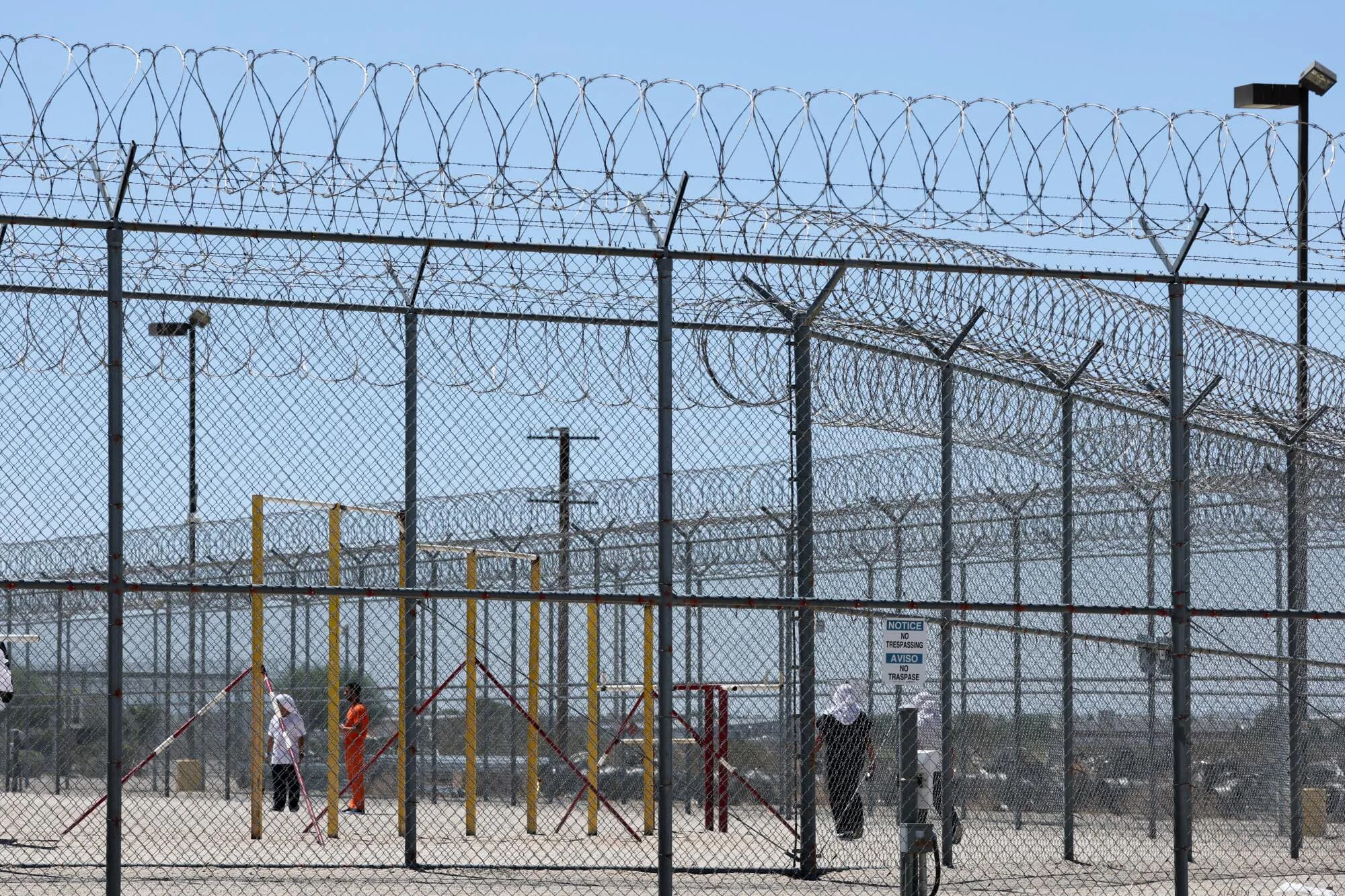
Immigration policy has defined the second Trump administration. According to ICE statistics, deportations have sharply increased in 2025. Statistics vary across sites: The Department of Homeland Security reports that the administration has deported 605,000 people, while The Guardian reports 327,000 deported. Regardless, the immigration crackdown has led to significant increases in deportations, arrests, and detention. Congress, through the One Big Beautiful Bill Act, has increased funding to ICE to $170 billion. 5% of those arrested by ICE in 2025 had a violent criminal record, and nearly 75% had no criminal record, a sharp shift from earlier years where the majority of arrests were for individuals with criminal history.
Supporters argue that these policies are working. They cite the drop in violent crimes to pre-2019 levels and a 20% decline in murder rates across the country as a success, claiming that these policies restore law and order and deter future migration. High funding and aggressive tactics, they believe, are justified to protect public safety and citizen rights to jobs, education and healthcare.
Opponents argue that the human and economic costs are too high. They highlight the estimated $96.7 billion in taxes illegal immigrants contribute to our country and $299 billion in spending power. After the fatal ICE shooting of Renee Good in Minneapolis on January 6, 2025 (the fourth person fatally shot by ICE agents since the new immigration policies began) and the defunding of the Department of Homeland Security’s Office for Civil Rights and Civil Liberties, critics condemn the tactics of the agency. Anti-ICE protests have sprung up across the country around concerns of treatment and the lack of oversight. For them, mass deportations erode civil liberties, harm families and go against American values.
In his re-election campaign, President Donald Trump denounced former President Joe Biden for loose border control and asserted that a second Trump term would heavily suppress illegal immigration at the U.S.-Mexico border. On his first day in office, President Trump issued an executive order effectively eliminating asylum for illegal immigrants and shutting down a government app that had previously allowed migrants to enter the States. Trump’s approach has indeed kept people out: after Trump pressured Mexican authorities to deter migrants, Border Patrol reported only 6,000 arrests in June 2025, a significant decrease from nearly 250,000 in December 2023. Secretary of Homeland Security Kristi Noem celebrated “the most secure border in American history” in a statement. Though the administration deported approximately 500,000 immigrants in 2025, it has yet to reach its mass deportation goal. Trump has signed two bills to bolster his efforts: a law requiring the detention of unauthorized migrants with criminal charges and another that tripled ICE’s budget. In the first year of his second term, Trump has upheld his promise of an immigration sweep, and he aims to continue these efforts in the years to come.
Ukraine-Russia War
Though Trump vowed to “end Russia’s invasion of Ukraine within 24 hours of his inauguration,” one year later, the U.S. is still negotiating with Kyiv and Moscow. Trump has held calls with Russian Leader Vladimir Putin and Ukrainian President Volodymyr Zelenskyy that often emphasize Trump’s both personal relationship with Putin and belief that direct communication could lead to a deal through negotiations. However, the peace framework proposed by Trump faced much criticism from Ukraine, the North Atlantic Treaty Organization (NATO), and other European allies. He has proposed limits on Ukraine’s military, suggested restrictions on NATO membership, and encouraged Ukraine to compromise territory. However, despite multiple propositions, either Ukraine or Russia has rejected each one. At the same time, Trump managed U.S. involvement in the war alongside these negotiations, pausing and later resuming U.S. military support while maintaining existing sanctions on Russia and supporting new ones targeting Russia’s energy and exports. Together, these efforts highlight the limits of his approach, as neither his diplomatic outreach nor policy pressure has produced a decisive end to the conflict.
Health and MAHA
In February of 2025, President Trump established the Make America Healthy Again (MAHA) commission, chaired by the Secretary of Health and Human Services (HHS) Robert F. Kennedy Jr., to confront the chronic disease crisis and address the rising costs of healthcare. According to the Centers for Disease Control and Prevention, three in four of U.S adults live with one or more chronic diseases and obesity affects 40% of adults, costing the country $1.7 trillion in direct and indirect costs through Medicare, Medicaid and lost economic productivity of patients and medical staff.
MAHA directed the HHS to tighten the U.S. Food and Drug Administration’s (FDA) oversight of food additives through the GRAS (Generally Recognized As Safe) process and expanded programs emphasizing whole foods, reduced sugar intake and lifestyle-based prevention.
Supporters highlight MAHA’s shift from treating disease to preventing it. By targeting ultra-processed food and sugar, they confront the root cause and promise lower long-term health care spending and a healthier, more productive population. They frame MAHA as reducing bureaucracy and protecting the American taxpayer.
Critics raise several concerns, including the possibility of stricter regulation of additives burdening food manufacturers and price increases disproportionately impacting low-income families. Others also worry about the politicization of FDA science and question if MAHA proposals are based on evidence or ideology. The question of the link between Tylenol and autism is one point in this debate, as is the HHS’s downgrading of recommendations for six childhood vaccines, recommending that American children no longer be routinely given shots to prevent hepatitis A, meningitis, rotavirus and the flu, and removing of all 17 members of the Center for Disease Control (CDC)’s vaccine advisory committee.