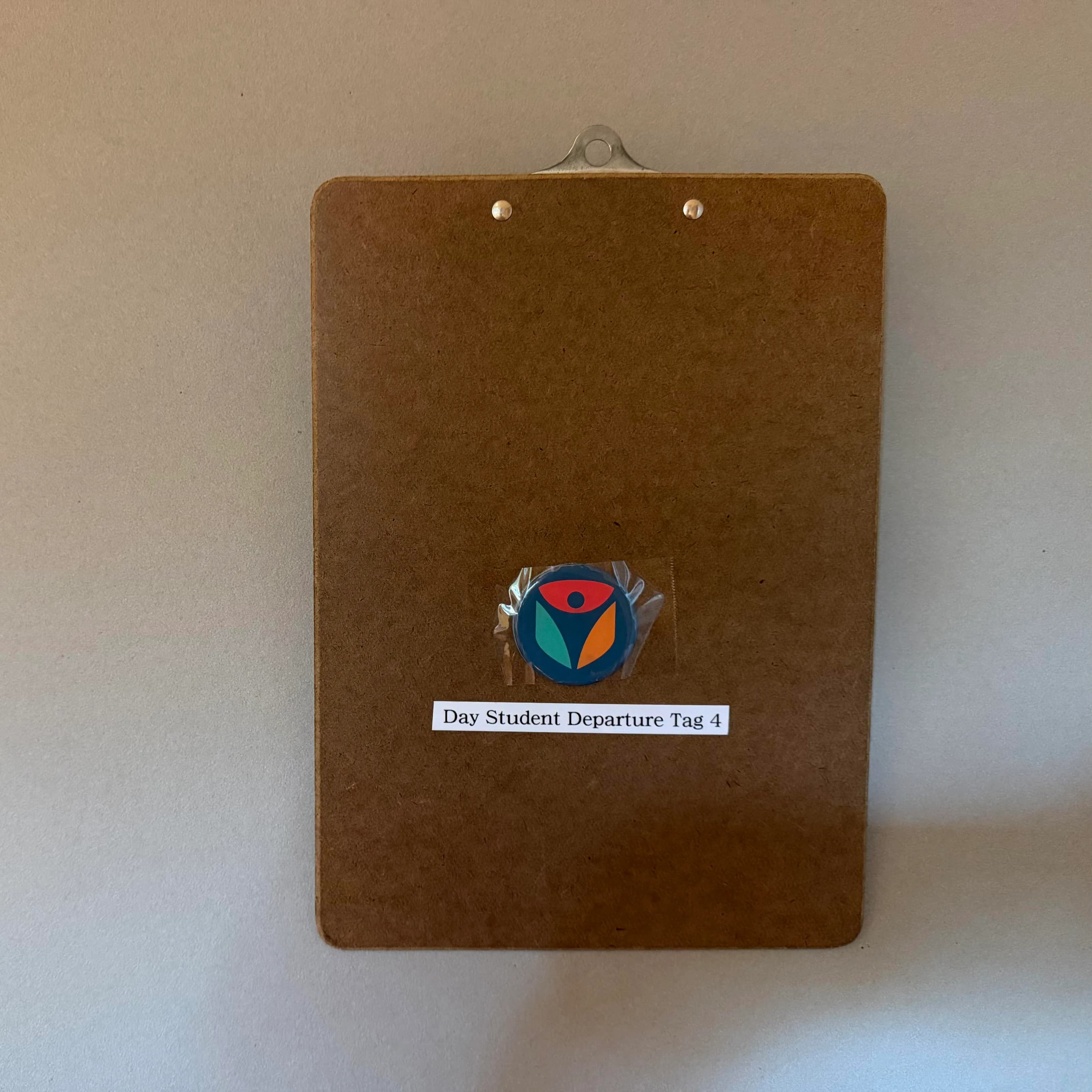
During the first week of school, faculty and students adjusted to a new sign-in and sign-out system through the REACH app, previously used only by boarding students or students wishing to participate in off-campus activities. Under the new system, boarding students must check in three times a day, while day students must check in and out each time they arrive and leave campus.
Associate Dean of Students André Heard said the change is intended to address gaps in the school’s previous methods of accounting for students. “It's really hard for us to say that we're taking care of our students if we don't even know if they're here,” he said.
Before introducing REACH at Milton in the fall of 2024, the school relied on a combination of classroom attendance, student check-ins, and other systems to track students on campus. Heard described this process as a “hodgepodge” of information, without a centralized database showing which students were present at a given time. “At some point you have to bring those systems together,” he explained.
Unlike Veracross, which assumes all students are present unless marked absent, REACH allows administrators to track which students have checked in and to display their locations clearly. Heard said that, during the system’s early stages, the school is still determining where to position check-in stations, noting that students may head to different locations after arriving on campus. For example, Heard said, students who park at the ACC might go directly to class, the dining hall, or the Stu, making a check-in station at the ACC less practical. The school will continue observing students’ routines to determine the most effective check-in locations and to avoid bottlenecks.
The system also introduces more consistent check-in times to account for changes in students’ locations throughout the day. On weekends, when there are no classes to provide attendance records, REACH offers a more consistent way of tracking students. However, the “two major transition points for our campus” that Heard has chosen to address through morning and evening check-ins are “when people are showing up to campus and then when people are leaving.”
Heard described the system as being in its early stages. During the system’s first days, approximately 130 of Milton’s more than 700 students had not completed their first check-in by midday. By the second semester, he hopes the system will reduce the number of students administrators need to locate to around 20 or 25 and ensure that all boarding students are accounted for each night.
For some students, adjusting to the new system has involved changes to their daily routines. Newnew Zhang ’28 said that finding a check-in location can sometimes be inconvenient, particularly when students are trying to get to class. “This morning I was walking in the Stu, and I was going to take the elevator up to English, but I realized that there is nowhere to check in if I took the elevator,” Zhang said. “That happens too if I have a first period class in Ware.” Julia Goddard ’29 said she also has had to leave earlier for class to accommodate check-in, while Grace Polimeno ’28 questioned whether the system was necessary when classroom attendance already exists. “It would be easier if every teacher in class had a tap-in,” Polimeno said. On the other hand, Katherine Sheng ’28 described the new protocols as “not that bad.”
The system’s implementation has also affected faculty responsibilities. English teacher and Hallowell dorm parent Lou Kinder said the new check-ins have given them an additional opportunity to interact with students, especially on weekends. “It definitely gave me an excuse to keep an eye on people,” Kinder said. Kinder added that the additional time commitment has not been particularly burdensome, as students generally come to them for check-in. “It’s pretty early to tell,” Kinder said of the system’s effectiveness, “but the students here are generally pretty compliant, so it’s working so far.”
As the policy develops, Heard encourages students to offer feedback. Ultimately, he envisions a streamlined system that reliably accounts for students while integrating smoothly into their daily routines.