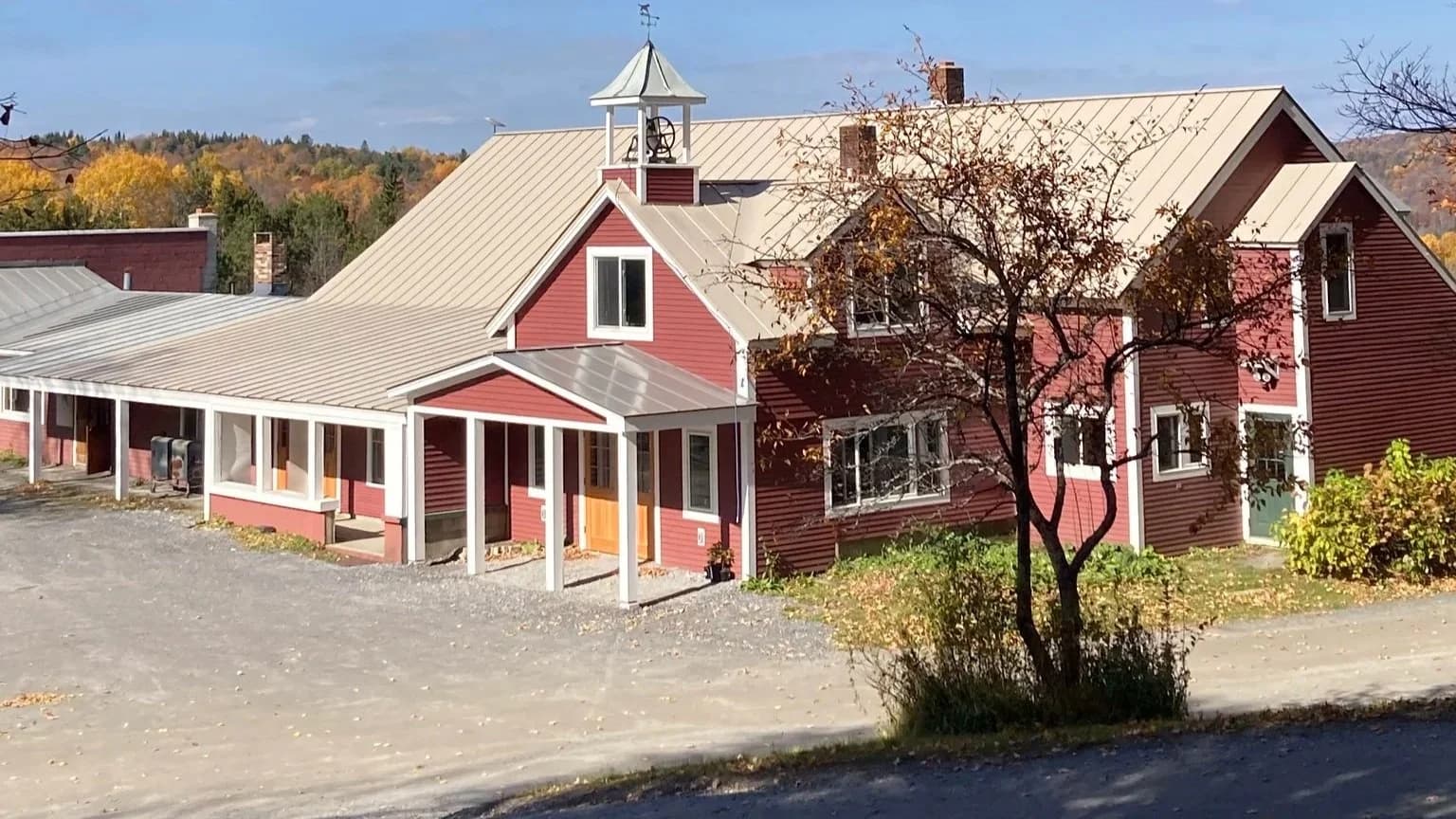
For millions of Americans, everyday manual labor is not a “retreat” from daily life. Rather, such labor is a fact of daily life itself, and a way to provide for themselves. But at places like the Mountain School, students pay $40,000 in tuition to perform the kind of physical work that many families hope education will allow their children to avoid. In the early hours of the morning, they will feed animals, clean stalls, and complete chores. A few hours later, those same students attend classes and prepare for some of the most selective colleges in the country.
This contradiction and the privilege surrounding it helped fuel a 2026 critique by Wall Street Journal writer Roshan Fernandaz who argues that the Mountain School—a working farm and educational institution affiliated with Milton—appeals partly because it distinguishes students in an increasingly competitive college-admissions process. The article quotes the Mountain School Director Alex Myers as saying that the school is “well-represented at Goldman Sachs,” a statement that implies that Mountain School alumni rarely return to manual or agricultural work. Fernandaz argues that the difference between students’ manual labor and its graduates’ job placement makes the experience less genuine as it justifies itself merely through an admissions advantage.
So, can the reason for doing the work make the experience meaningless, or can choosing to perform unfamiliar work still fundamentally change how a student sees blue-collar jobs and the world around them?
People whose jobs require physical labor every day usually have no return ticket; students will return to their regular lives after a semester or two. Experiencing hard work temporarily—and framing it as personal growth—is itself a privilege. However, privilege and personal growth are not mutually exclusive. A teenager who has spent most of their life surrounded by classrooms, screens, and carefully controlled schedules may genuinely gain something from working alongside other people and completing tangible, physical tasks.
This distinction came up when I began thinking about my own experiences at East Hill Farm, a working inn and farm in New Hampshire, which my family visits every year for Easter weekend. Despite being a well-traveled person, I still think of East Hill Farm first whenever the “what’s your favorite place” question comes up.
After thinking about why a rural farm was truly my favorite place, I realized that what I value most is the simplicity of “the farm life,” a simplicity which is exactly what programs like the Mountain School offer. While I’m at the farm, I spend less time on my phone, think less about school and deadlines, and become more aware and grateful for the people and environment around me. The choice in the mornings to go for a run to watch the sunrise instead of reaching straight for my phone feels easier to make, and working with the farmers feels like a break instead of toilsome labor. I am not pretending that a few days on a farm gives me an understanding of what it means to make your living only through hours of physical labor, and I am not seeking to make such a claim.
While we may find students taking advantage of any program solely for the sake of college admissions uncomfortable, this advantage-seeking does not take away the validity of those students whose lives changed because of programs like the Mountain School. Some students will inevitably attend the Mountain School partly to put their attendance on their college applications, just as some students volunteer or pursue internships because they believe those experiences will help them stand out to admissions committees. But the existence of those students does not invalidate everyone else. Reducing the Mountain School to another admissions credential ignores the possibility that students can arrive for imperfect reasons and still leave genuinely changed for the better.
What truly matters about programs like the Mountain School depends not on the motives of the attendees, but on whether they leave with a deeper understanding of work, community, and themselves. Perhaps those who criticize similar programs are simply envious of those who had the opportunity to disconnect from the flashing lights and screeching tires that fill New York City. Maybe we can extend an invitation their way. The value of an experience should not be measured by the privilege of those who were able to access it but by what they choose to take away.