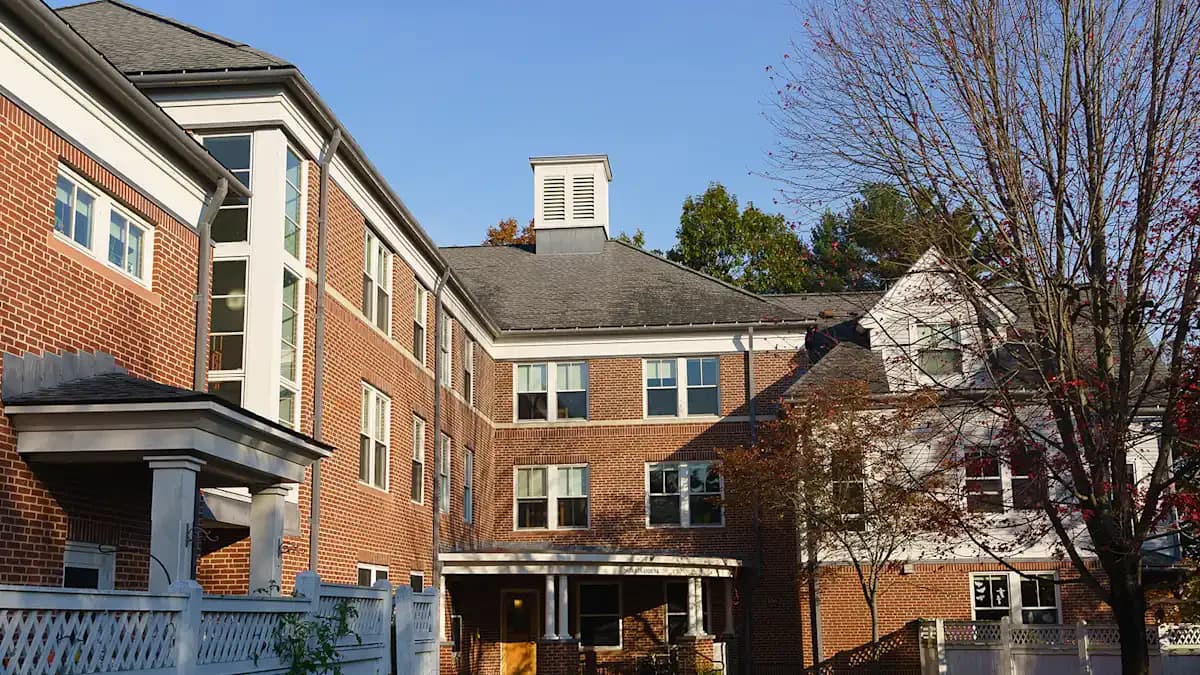
Walking into Norris at 1:15 p.m. on a Friday in May, I ask myself: do I have class? The answer is: Yes. Do I really care? No. I drop my bag down and sleep.
To me, Norris is more than just a place to sleep in times like these—it is a second home. And for many others who board at Milton, their dorm is the same. Though I transitioned from boarding to being a day student, I kept my classes and friends. However, I lost the one thing boarders get that Milton doesn’t provide anyone else: a house.
The percentage of students who report a divide between day students and boarders is growing. According to the State of the Acad survey by The Milton Paper, 53.5% of respondents in 2024 believed that Milton had a boarder-day divide. By 2026, that number had reached 70.6%.
Boarders join one of nine houses and stay there all four years. A Class IV boarder gets to have upperclassmen who know them, house faculty who they can reach out to, and traditions much older than they are. Day students receive nothing comparable. Other than the day monitors, day students don’t have anything uniquely for them. We have advisories and teams, but nothing that can replace a dorm’s community.
In a September 14 email, Director of Residential Life Christopher Lewis said that shared meals bring together “all members of our community.” The email also announced a new policy that reserved Forbes from 6:00 to 6:45 p.m. on Tuesdays and Thursdays for sit-down dinner. Day students may attend, provided that they are “invited guests of boarders.” The goal of the initiative is understandable: sit-down dinner does, indeed, bring together students. Nevertheless, a day student shouldn’t need an invitation to eat.
House affiliation would replace the guest invitation with something of more substance. Each day student would get a house on arrival and keep it until they graduate. Affiliates would be invited to certain house events—like dorm dodgeball or dorm trips, for example. They would be able to join their house’s sit-down dinner on a rotating sign-up. This way, house faculty know the exact numbers in advance. Day students could use the common room during set hours either during the day or before study hall, signing in with the dorm parent.
Milton would not be the first to try giving day students a dorm. At Phillips Academy Andover, students are organized into five different residential “clusters” that everyone belongs to, regardless of boarding status. Andover encourages day students to eat every meal on campus with their “clusters” to get to know boarding students better. The Lawrenceville School gives each day student a study room in an assigned house and seats them with their housemates at breakfast, lunch, and dinner. Phillips Exeter Academy also uses a similar dorm affiliation program. Milton advertises a “close-knit boarding and day community,” but the school needs to foster such bonds.
Of course, boarders deserve privacy in their dorm. A house’s common room is relatively small, and a house could gain nearly as many affiliates as residents. But affiliation is not residency. Bedrooms would stay off-limits, and the common-room hours would be limited. Furthermore, house heads would set their own terms. The dinner rotation would cap attendance at the maximum number each dining room can seat. Some day students would not want a house, and nobody would force them. They would not even have to make use of it, but the option should be theirs to pass up.
At Convocation this fall, Head of School Alixe Callen ’88 told us that her favorite word is “community.” The houses are one of the places on campus where Milton practices community best. Yet, half of the Upper School stands outside them. I’ve experienced both, and I know which side truly felt like Milton. Give every day student a house.