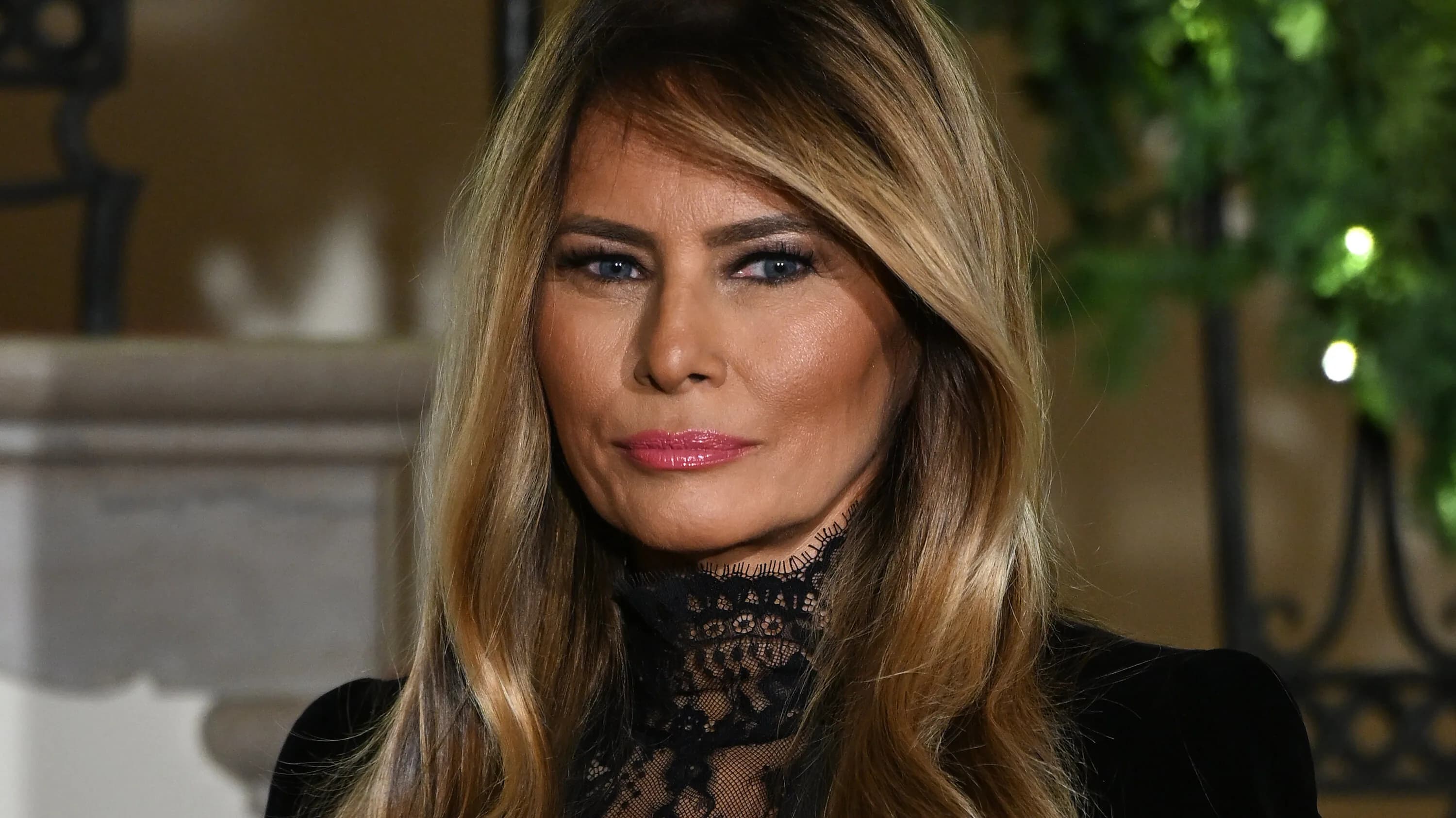
On January 30, First Lady Melania Trump, author of the book Melania, released an eponymous documentary, also titled Melania. Directed by Brett Ratner, the Rush Hour filmmaker who disappeared from Hollywood after sexual misconduct allegations, the documentary provoked a polarized reception.
Depending on which news outlet you subscribe to, Melania was either hailed as one of the greatest films ever (persevering despite overly picky critics) or a disgustingly superficial $75 million Amazon payoff disguised as a documentary. As of February 7, Melania currently retains an 8% Tomatometer (critic) rating and a 99% Popcornmeter (audience) rating on the movie review website Rotten Tomatoes. The exceedingly high audience rating—which is the highest in the site’s history—may not be that surprising, considering that those who choose to watch this movie are often those predisposed to like it. Ticket-buyers were practically voting with their wallets. According to Forbes, only one ticket was sold among Boston Common’s three opening-night showtimes, but theaters in Dallas, Houston, West Palm Beach, and Tampa burst with conservative fans. New York Times opinion writer Carlos Lozada even joked about how the only diversity at the Washington D.C. showing he attended came from the journalists. He wrote, “[On] the movie’s opening on Friday, I encountered people from all walks of life—that is, from The Atlantic and The Wall Street Journal, from CNN and The New York Times.”
Even the reported opening earnings varied across party divisions. After opening weekend, while Republican news outlet Fox News reported a “nearly $8 million” opening, other publications including The New York Times, Business Insider, and CNBC all reported a figure of $7 million. The actual opening weekend total gross worldwide stands at $7.3 million, according to Box Office Mojo by IMDb Pro. We have reached a point where the term “alternative facts” is no longer a mocked oxymoron from 2017. It is an accepted aspect of daily life.
The documentary’s description supposedly promises “intimacy,” a word that appears repeatedly in the first lady documentary landscape—from the Hulu documentary Hillary's “intimate portrait” portraying Hillary Clinton to Becoming’s “intimate documentary” featuring Michelle Obama. Now, Melania’s “intimate chronicle” completes the “intimacy” trifecta. Melania offers generic—and uncontroversial—commentary that sounds like ChatGPT’s response to the prompt, “Write an unproblematic and profound-sounding documentary commentary for Melania Trump’s movie.” For example, Trump says at one point: “As America’s first lady, the real nobility is in becoming stronger than the person I was yesterday. This strength cannot come from the title. It’s a quiet force from within.” In another voiceover, Trump proclaims, “As first lady, I constantly think about how our lawmakers can build dignity, create equal opportunity, and foster compassion through the unity of all Americans.”
However, even though the content of the movie is hardly inflammatory, the politics surrounding the movie serves as a disheartening reflection of just how polarized the United States has become. The movie morphs from a debatably “intimate” look into the First Lady’s life into a Rorschach test: upon looking at the same 104 minutes of footage, one group of people sees a masterpiece offering an inner look at Trump’s life, while another sees everything wrong with the current administration. In fact, the backlash escalated so drastically in Los Angeles that buses with Melania advertisements had to be rerouted. What happened in Los Angeles not only represents people’s protests of a movie; it represents a symptom of an ailing society in which different groups of people have lost the ability to live in the same world. The phenomenon of interpreting objective facts in a party-oriented manner infects us beyond just the perception of a movie. It is everywhere. It is a pandemic. When the footage of Renee Good’s death came out, while most well-known and generally trusted news outlets like The New York Times or The Guardian reported that she was wrongly killed by the Immigration and Customs Enforcement (ICE) agent, the Department of Homeland Security (DHS) called her actions “an act of domestic terrorism,” and a Trump administration aide, Stephen Miller, accused Alex Pretti, who was also shot by ICE agents in Minneapolis, of being “a would-be assassin.”
Perhaps out of spite, many viewers of Melania turned to a documentary based on another first lady’s autobiography: Becoming, which centers on Michelle Obama. According to The Independent, it experienced a 13,000% increase in viewership on Netflix the weekend of February 7 and 8. In a way, I suppose Netflix ought to thank Amazon: Netflix got free marketing, while Amazon spent $35 million promoting Melania. However, viewers’ choice of Becoming over Melania also reflects a disturbing trend: people are choosing to retreat into their own curated realities, using one documentary as an antidote to the other. We haven’t just lost common ground—we’ve even lost the ability to watch the same screen.