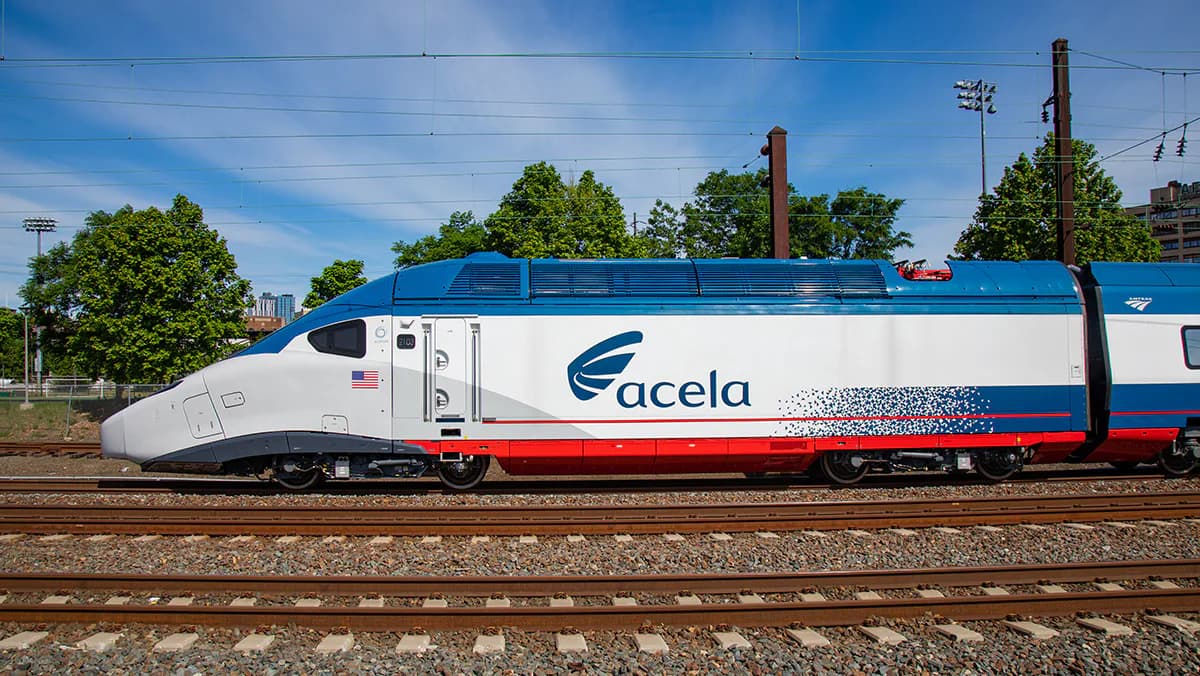
American high-speed rail (HSR) has been notoriously expensive and slow to develop. Compared with its European counterparts, America ranked as the sixth most expensive country to build HSR. Currently, only a handful of HSRs operate in the U.S., with the most famous being Amtrak’s Acela corridor connecting Boston, Massachusetts, to Washington, D.C., and Brightline’s regional network connecting Miami to Orlando, Florida.
The re-introduced American High-Speed Rail Act of 2026 would propel American HSR development forward through its amendments to existing regulations. It addresses key issues that plagued past development such as inconsistent funding, destructive expenditure deadlines, political restrictions, vague statutory definitions, and difficulty in right-of-way passages (H.R.9036). However, to develop regional rail networks effectively, the legislation should exclude the Northeast Corridor (NEC) from grant eligibility.
First, the bill clarifies the field by defining high-speed rail as systems sustaining speeds over 186 mph, while categorizing higher-speed rail as those sustaining speeds from 110mph to 186 mph (§ 26105 as amended from H.R.9036). This distinction requires transparency and leads to the bill’s focus on funding high-speed passenger travel comparable to European counterparts. In addition, increasing consideration of environmental impacts alongside equity would strengthen grant-selection criteria, while the bill’s authorization creates a sustainable funding structure for HSR, improving economic connectivity between regions and increasing related employment opportunities.
Second, this bill would alleviate the local financial strain for the massive civil projects needed for HSR through its dramatic boost in the extent of federal financial assistance from 50% to 100% for project-planning costs and federal net-capital cost sharing up to 100% from the original cap of 80% for those projects (§ 26101, § 26106 as amended from H.R.9036).
This bill would also make HSR travel more appealing to passengers by providing powerful tax and grant incentives for private freight corporations. They own nearly all existing right-of-way track and real estate: for example, Amtrak owns only 3% of its national network, a low ownership percentage that forces most remaining operations onto private freight railroads. Passenger operators would normally have to endure delays due to freight rail’s cargo trains, since buying out potential freight lines is cost-prohibitive. In a 2024 Amtrak report, freight railroads’ prioritization of freight trains—rather than the passenger prioritization required by law—caused 850,000 minutes of delay for Amtrak passengers (violations the DOJ has been reluctant to pursue). This bill combats this improper prioritization by offering those corporations total federal income-tax exclusions on the capital gains if they choose to sell or lease their corridors for passenger use. This tax incentive would mitigate potential delays and shorten trip durations.
Finally, the bill seeks to remove federally appointed expenditure deadlines. Rigid spending timelines routinely fail because complex infrastructure might face litigation or unexpected engineering delays. By allowing funds to remain available until expended, the bill ensures that unforeseeable procedural delays would no longer result in the retraction of vital public funding.
Regarding the Northeastern corridor, or NEC, generic HSR grants historically excluded the NEC because it relied on separate, dedicated congressional appropriations. Although this bill makes NEC eligible for more development funds, the vast majority of the new grants would sadly exclude Acela. Under the bill’s strict statutory definitions, the Acela, America’s fastest train running at a sustained maximum of 160 mph, falls under the category “higher speed rail” (§ 26105 as amended from H.R.9036). This legislation caps total annual funding for this lower tier at just twenty percent of the total grant allocated in each fiscal year (§ 26104 as amended from H.R.9036). Therefore, NEC could see limited infrastructure renewals competing with other regional high-speed rail for those funds. However, NEC would have a massive advantage over other regional high-speed rail systems, such as those in the Midwest and the South, because this bill’s modified selection criteria explicitly favor NEC’s strengths in ridership density, existing station transit connections, multi-state collaborations, and high state matching funds (§ 26106).
Thus, excluding NEC from this program’s eligibility would yield more benefits for national rail development by insulating less-developed regional lines from being crowded by NEC’s massive capital demands. For example, only around 40% of the costs are covered by concrete funding sources in the recently proposed $176 billion plan to rebuild the Northeast rail corridor. This adjustment would ensure that twenty percent of annual grants are reserved for developing higher-speed networks in the rest of the nation. While re-excluding the NEC from competing for high-speed rail funds is a difficult compromise, this strategy ultimately guarantees more funding for other regional high-speed rail that faces budget cuts and inconsistent funding,
If passed, the American High-Speed Rail Act could propel national transit development through sustainable funding mechanisms, clear speed categorization and focus, corporate incentives for right-of-way leases, and modernized grant criteria to boost economic connectivity, travel convenience, and long-term employment opportunities.