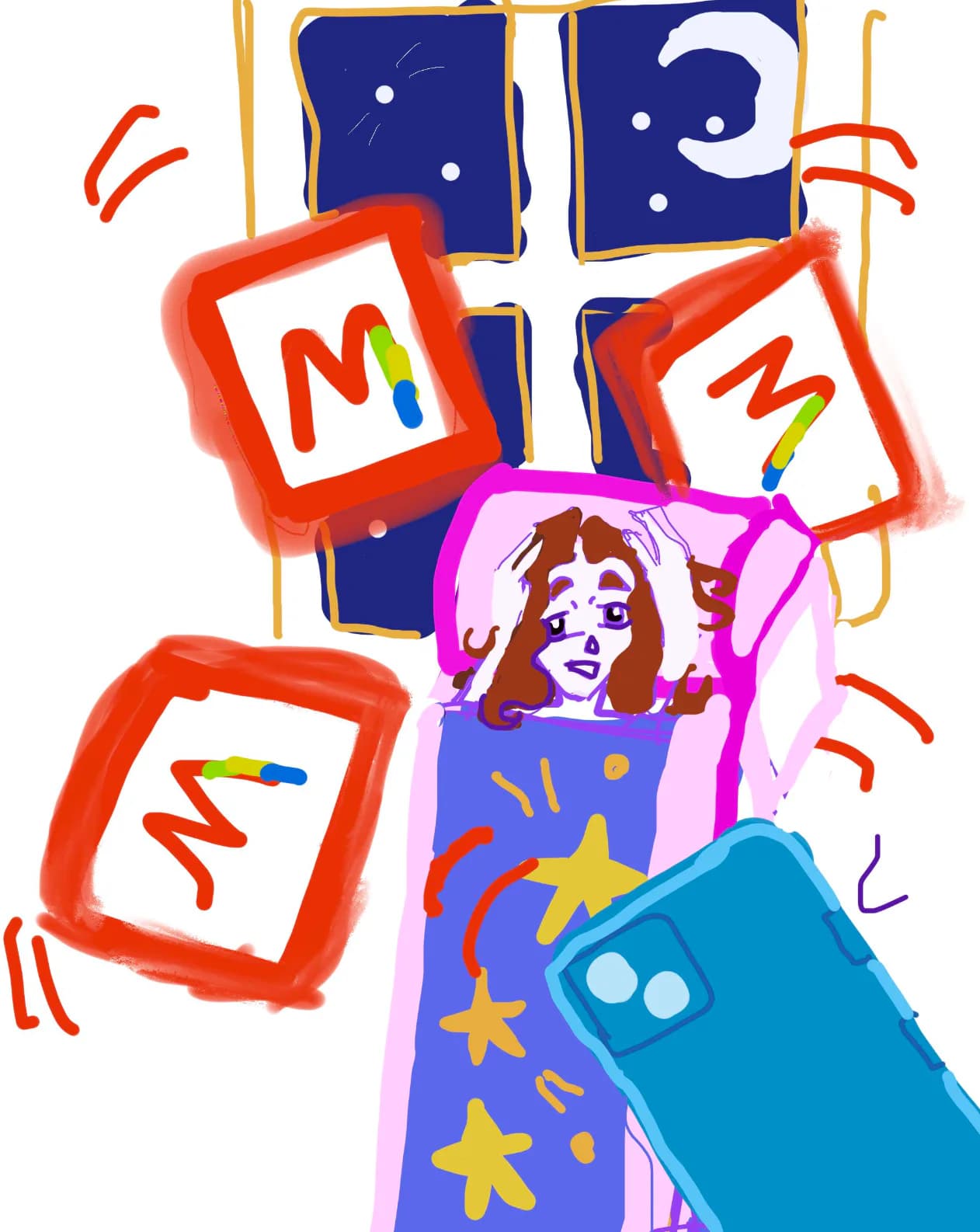
Email creates an environment where everyone is reachable at all times. However, what happens when people try to reach everyone at all times? Our rest is undermined, and our inboxes are flooded. Milton Academy’s emailing culture is inefficient and taxing on students due to late-night emails and overuse of Club Hub.
The number of late-night emails is small, but each one negatively impacts about a third of the student body. Within the past month, I counted six emails sent out after 9:40 p.m., three of which were sent out after 11:30 p.m. Six may not seem like a lot. But according to a poll I sent out in the past week that received 43 responses, around 49% of respondents go to bed between 9:00 and 11:00 p.m., so when these students start winding down, their phones light up with notifications. About one in three respondents say that late-night emails have interrupted their relaxation, a figure that implies that late-night emails disrupt hundreds of people at Milton.
Some might argue that you should just turn off notifications when you go to bed, a practice which could work for some people, but turning off the ringer isn’t a viable option because students face a wide range of circumstances where missing a call or alarm could have detrimental effects on both personal and school life. Second, recipients shouldn’t have to turn off notifications to avoid disrupting their reasonably expected relaxation time. Instead, the sender should weigh whether the email’s timeliness and necessity are worth it, so one out of three students doesn’t suffer.
When asked, “What do you think we as a community need to change about emailing?” in the poll, students cited Club Hub emails as one of their biggest concerns. Nevertheless, the poll showed that most students don’t want to get rid of it. The main problem is the excessive amount of emailing. More than 90% of respondents think that they receive too many emails from clubs that they aren’t related to. Timothy Baelee ’29 claims, “I have emails from Tang, Latinx, Amnesty International… I am not a member or interested member for any of these clubs on Club Hub, yet I keep receiving emails about activities or events that said clubs are holding.” This reflects what others have said in their statements as well. The influx of emails has made about 50% of students not check their Club Hub emails, which can hurt a real event that deserves high attendance. Overusing Club Announcement emails has made them effectively useless. Moving these emails to spam might seem like a viable option, but because of Milton Academy’s email settings, many people are barred from sorting Club Hub into spam.
The simplest solution to late-night emails would be to set a precedent for when not to email. With around half of students starting to go to bed around 10:00 p.m. and the library closing at 9:45 p.m., any lost-and-found emails after 10:00 p.m. would be disruptive for recipients and useless for anyone looking for an item. The school can reinforce this precedent through a policy or by letting the student body know that an all-school email after 10:00 p.m. can almost always be sent at a better time. If you were to realize you lost something late at night, then Gmail offers a “schedule send” option where you can simply schedule an email to be sent out at 8:00 a.m. But Club Hub requires more changes. Malcolm Kirkman ’29 proposed that “club notifications… only go out to interested members, especially for exclusive affinity spaces,” and others agree. For regular club meetings, clubs should post an announcement on their own club page, so most students don’t get an influx of emails from every club. If a club is hosting a special event like a speaker or tryouts for club teams, then they should send out an all-school Club Hub email. If these clubs want students to really see their event, posters would help draw greater attention to it.
By establishing these changes, the student body can finally reclaim our relaxation, as well as our inboxes.