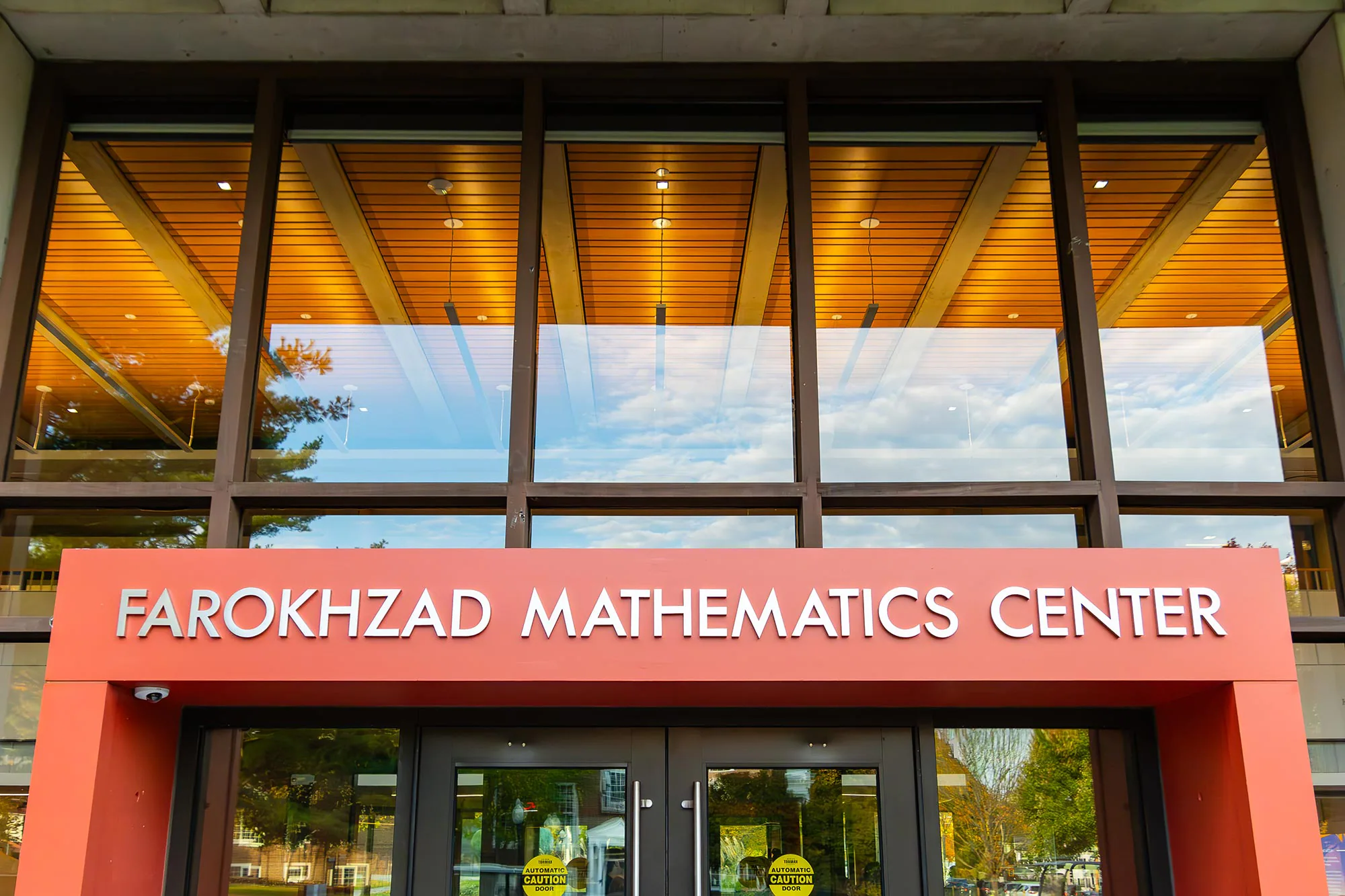
You're stressed and frazzled in the FMC, sitting in one of those uncomfortable chairs, about to take your timed math test. The anxiety-loaded chatter from your classmates is echoing in your ears and you can't focus on your last minute review of flashcards. Your teacher ambles in, handing out a thick packet of math problems. Grabbing your pencil, you scribble your name out quickly, because spending more than a second would be a waste of precious time. Suddenly, it feels like half the class gets up to take the test in their private and quiet rooms, with nearly twice the amount of time you have. They have time to write their names out with glitter pen and heart the dot on the “i.”
The moment those students leave the room, the test stops feeling like a measure of knowledge and starts feeling like a race some of us were not allowed to train for. If many students are allowed to take their tests in a calm environment with time and a half, tests may not be reflecting teachers’ ability to teach students, instead reflecting students’ ability to do well under pressure. The question among the leftover students may be, “Why don’t I have extra time?”
Abby Robson ‘27, who has dyslexia and extra time accommodations, feels that it can feel “invalidating” when too many people are “diagnosed” as needing extra time. She explained, “It’s frustrating because some people seem to just use the diagnosis to get an advantage, when for others, it’s something we genuinely rely on to level the playing field.”
So how do students obtain extra time? Director of Academic Support Lainey Sloman noted that families don’t need expensive testing to qualify for accommodations. “A psychoeducational evaluation is free. Costs zero dollars.” A family only needs to write a letter to their local public school’s special education coordinator requesting an evaluation, and “you are guaranteed that service.”
She argued the problem is not that people get diagnosed too easily or unfairly; it's that not everyone has equal access to the system. She explained that some families “don’t know how to go about” the free evaluation option, and that barriers include “language, time… the education, the information for families and caregivers.”
Many families, especially those working long hours, new to the U.S. school system, or who speak only languages other than English, never learn this information. So instead, what happens is more families with more resources seek private neuropsych evaluations, which according to Sloman can cost anywhere from “a thousand dollars to… seven thousand dollars,” with insurance "usually just cover[ing] half.”
In other words, the system is inequitable, but not in the way many people may assume. It’s not that some students fake their diagnoses; it’s that the path to documentation reflects a broader information gap about accommodations.
So, what’s the solution? One option would be giving time and a half to all students would level the playing field and offer a more accurate reflection of how well teachers actually taught the material. For example, a test meant to take 60 minutes would instead give everyone 90. This approach supports the idea that classrooms should work for all kinds of learners—not just the ones whose families can navigate the pathway to evaluations and diagnoses. With equal time, students who don’t have access to private testing or extra help could finally work without racing the clock.
Sloman disagreed, saying that universal time “is not logistically possible,” and “you’re essentially removing an accommodation by giving it to all.” If every student has the option of extended time, then neurotypical students gain an advantage they don’t need, and students who truly require accommodations lose the support meant to level the field.
Instead of universal extra time, Sloman proposed something different: redesigning how we assess students altogether. She explained that if she could rebuild the system from scratch, she would focus on “a broad range of different types of assessments,” so that all learning profiles can “have an access point that speaks to their strengths.” Timed tests can still exist, because “in life there are tasks you have to finish in a specific amount of time,” but they shouldn’t dominate how we measure learning. When timed tests are the primary measure, they inherently favor certain learners, certain brains, and certain backgrounds.
And maybe that’s the real issue: not whether extra time is a “real” need, but whether our system is far too dependent on timed assessments to begin with. Instead of arguing over who deserves a few extra minutes, maybe we should be questioning why those minutes hold so much power at all. Maybe then it wouldn’t just be the students built for the clock who get to dot the “i” with a heart, but everyone, because the system finally made room for all kinds of learners.