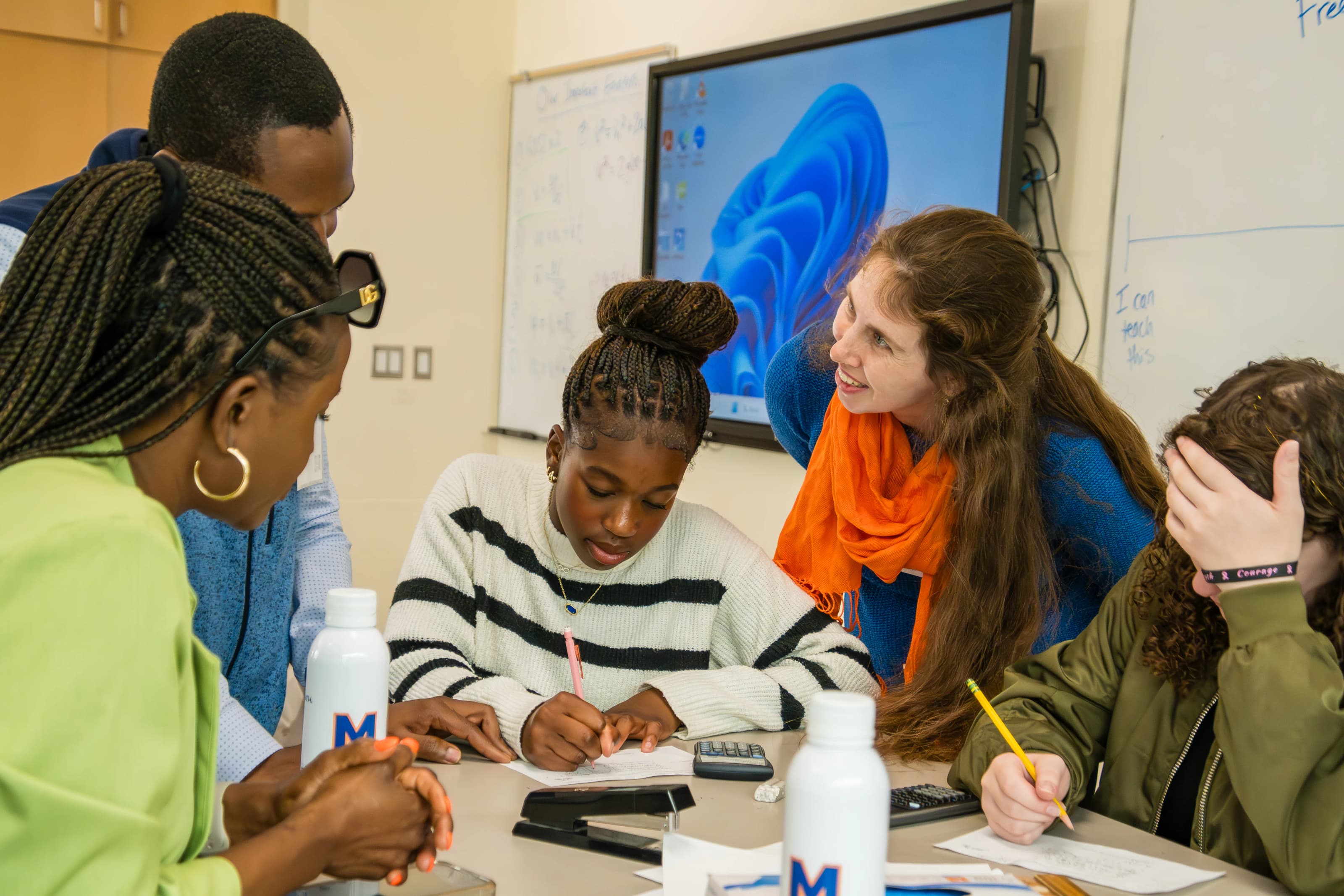
Family Weekend presents an opportunity for the Upper School to come together and provide families with a snapshot of a day in the life of a Milton student, but that opportunity could stand some improvement.
Upper School Principal Rachel Stone felt, as she describes in her newsletter, that families were “actively engaged” in school life, whether that be in the classroom or in the variety of activities happening over the weekend. Family Weekend consists of a half-day schedule in which family members shadow their children as the latter move through every class. In the afternoon, families have time to meet with faculty one-on-one to learn more about their students and classes individually. Though hectic at times, this schedule maximizes the time parents have to view their children’s academic life while also allowing time for parent-teacher conferences.
Unfortunately, this fast-paced style of programming can misinform parents about what classes look like. In some classes, the focus is all about tailoring activities specifically to family members. In other cases, parent engagement can overwhelm students and teachers. As a result, the overall purpose of the academic portion of family weekend is reduced in value. This detraction is not the fault of students, teachers, or parents, but is telling of the need for some changes.
The first area for improvement is class planning. Currently, Family Weekend classes operate differently depending on the class. Some start with a Q&A session; some have an engaging activity with parents; and some function similarly to normal class. For families to truly understand life at Milton, teachers should focus on making the limited class time resemble regular classes as closely as possible. To make classes flow normally, it might be helpful to focus on class efficiency. While a course overview or Q&A can certainly provide insight for families, a slow or drawn out beginning of class can disrupt the flow and limit actual class time. Teachers might consider finding a way to provide course overviews and answer standard questions in a way that does not interfere with the teaching and learning in the class. By sending a question form to families in advance, teachers could then be prepared to quickly answer them and begin class. Another option would be to compile answers to common questions into a handout. This possibility would not only save time but also facilitate families’ recollection of classes.
Though making the beginning of class more succinct helps get class started more quickly, continuing with a class can still prove difficult if there are frequent disruptions due to groups entering at different times, so Family Weekend also needs improvement in scheduling. With Family Weekend comes a huge uptick in the number of people on campus. Especially on Friday, this congestion makes navigation to classrooms harder, especially since many families are unfamiliar with Milton’s campus. The current Family Weekend schedule allows for only ten minutes of transition time between classes, and while this number cushions the regular school day’s five minutes, the time is still tight, especially when navigating the Student Center stairway. Increasing the time between classes further would ensure more thoroughly that at the beginning of class, everyone has arrived and is ready to start.
Whether it be large group discussions, a lab, or a lecture, classes should provide families with accurate insight into students’ academic lives. This faithfulness to a regular class structure will ultimately help families stay engaged in their students’ learning process. Seeing genuine learning take place in classes is an important part of what Family Weekend aims to emulate, and with these small changes, we can make that dream a reality.