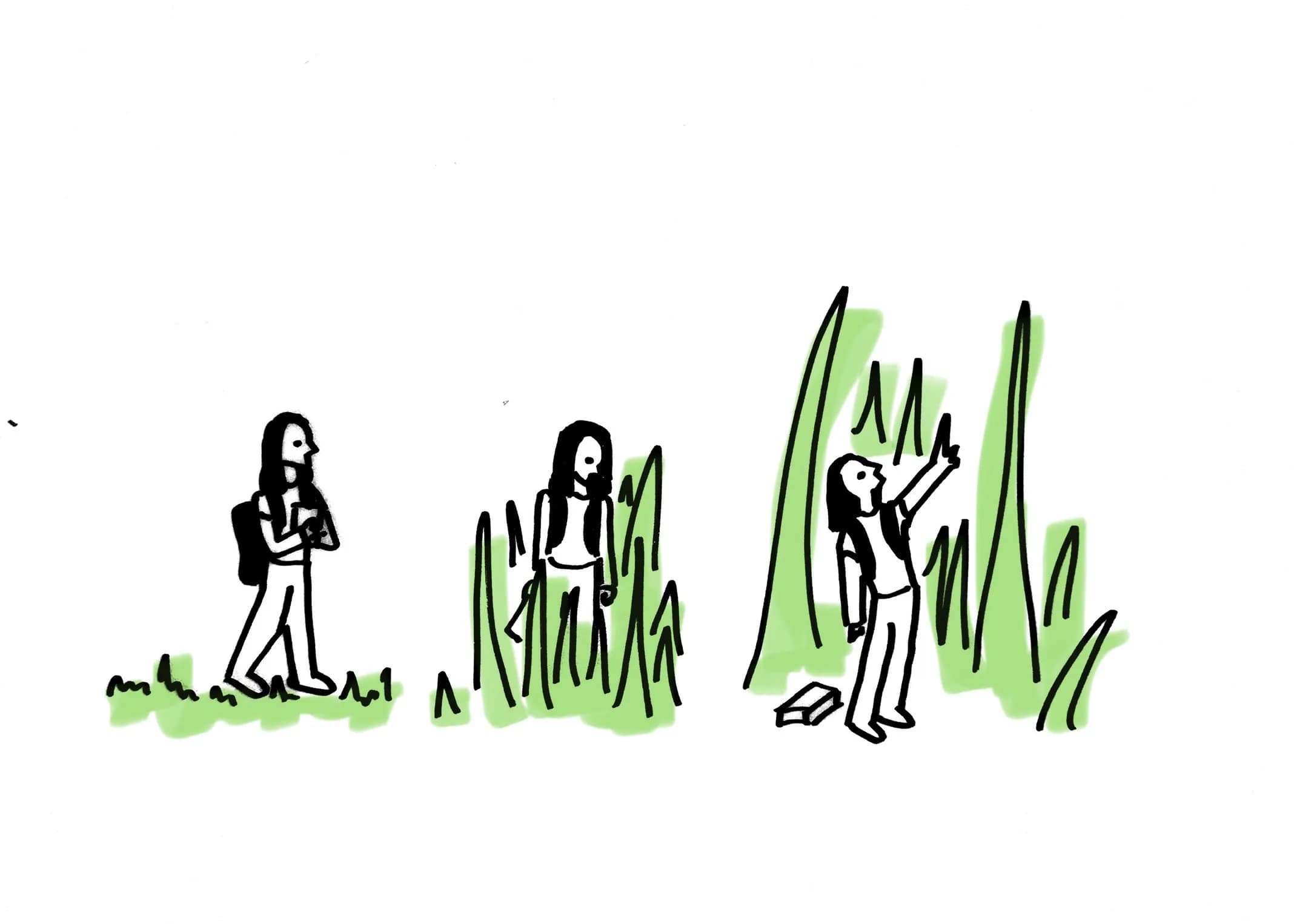
Every day, I cross the quad with my friends. To reach their dorms, the cafeteria, or the Stu, one must pass by the lawn at some capacity. Irrespective of the gray November skies or rainy April mornings, to me, the grass always seems to be green.
Naturally, I became curious about the maintenance of the quad. Unfortunately, Milton Academy does not publicly report their specific maintenance spendings. The school disclosed $107 million as total organization expenses for the fiscal year of 2025 and reported approximately $2.4 million as occupancy expense for broader facilities-related expenses, not exclusively grounds-maintenance spending. Milton Academy’s January 2020 Town-Academy Report for 2018–2019 stated that the school spent $2.5 million in the fiscal year 2019 to businesses and organizations for services such as landscaping, construction, photography, and catering. While these figures likely include the maintenance of grass, they do not provide sufficient information regarding the proportions of services to expenditure.
However, the expense can be estimated. Campus consists of twelve athletic fields and about 130 acres of land; a 2019 report credits irrigation to be sourced from well water; labor tasks consist of mowing, irrigation, fertilization, aeration/seeding, field markings, and turf repair, comprising of approximately 224 labor hours per field per season, or 2,240 hours annually. With this information and assuming $23.5 per hour wages, the school likely spends around $350,000 per year on lawn maintenance.
The cost of grass extends beyond monetary burden. According to guidance by the University of Florida, the volume of water necessary to cover one acre with one inch of water is approximately 27,154 U.S. gallons. Assuming 0.5 inches of water comes from precipitation per Massachusetts climate expectation, one can reasonably expect 100 acres of grass to require 1.36 million gallons of water for irrigation. To put the environmental impact into perspective, the average US household would use this much water in twelve years.
To me these costs seem extreme. Picturesque grass is far from a necessity and definitely does not justify the school’s spending hundreds of thousands of dollars—or five years worth of Milton tuition—on grass. To fixate on such a cosmetic aspect of our campus depicts a shallowness of prioritization. For example, the consistent rodent issues in the Athletic and Convocation Center and the Stu could be an alternative priority, if not financial aid, academic opportunities, or other improvements.
Yet Peter Gerukos ’28 believes that classmates tend “to point fingers at overspending on the grass” and treat the expense as a scapegoat when poor maintenance would likely result in “more complaints.” The Quad becomes a fixture of the community during the spring and fall seasons due to recreational activities like spikeball, volleyball, and hacky-sack. Instead of blaming the school for overspending on the quad, he suggests that the community utilize the space more.
Even so, the expense feels excessive. Admittedly, most elite communities possess beautiful spaces; the sprawling, green campuses of Ivy League schools, college preparatory schools, or country clubs typically act as the first impression of the institution. The University of Oklahoma reserves a 7.7 million operating budget for their landscaping team. Lead Assistant Superintendent at Oyster Harbors Club in Osterville, Massachusetts reported managing a 2.3 million dollar budget to maintain 140 acres of land, including an 18-hole golf course. Immediately, individuals are immersed in an aesthetic aspect of the institution; our brains naturally connect this beauty with other positive attributes. By human nature, we obsess over physical appearance.
Milton’s exclusive admissions process seeks to ensure that each student is an intellectual—one who, through our rigorous academic classes, learns to be critical of mainstream perception. We seek intellectual depth over superficial appearances. Even so, Milton spends a significant sum on their grass annually. This budget allows us to participate in varsity sports and casual competitions, but also illustrates superficiality in our values: we choose to prioritize grass and thus cosmetics. We choose to remain surface level. But at what point will we decide that the grass is green enough?