American social media personality Alix Earle—who has over fourteen million followers—was recently asked in an interview with Interview Magazine, “What’s the last book you read?” Her response reflects a broader societal issue: “I’ve never read a book. Like, maybe Dr. Seuss.”
Whether made in jest or not, Earle’s remarks underscore a troubling decline in our generation’s relationship with reading. According to the National Assessment of Educational Progress (NAEP), only 14% of thirteen-year-olds reported reading for fun almost every day in 2025, a figure down sharply from 27% in 2012.
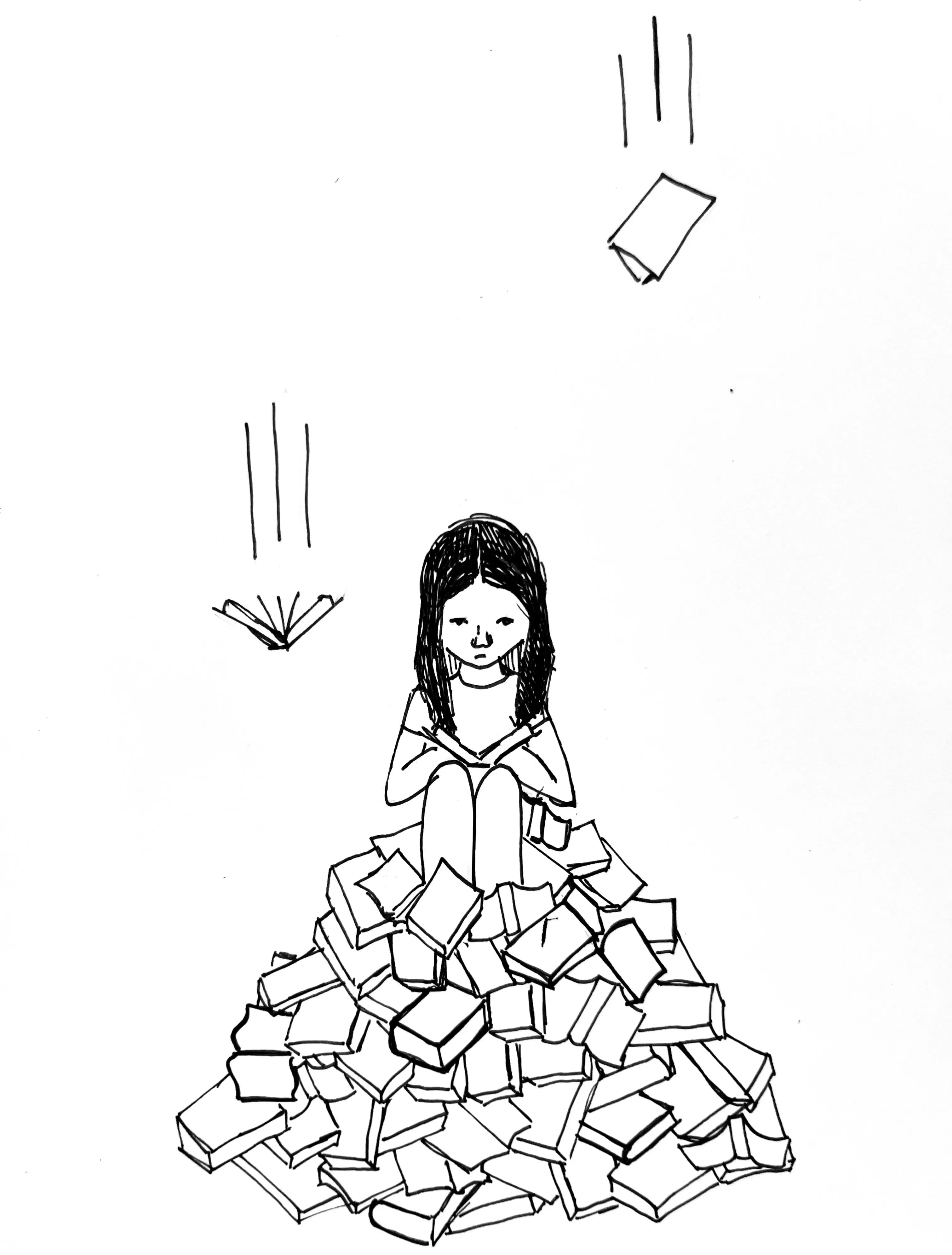
Technology has exposed teenagers to a wide range of entertainment. Television shows, movies, and short-form media may seem more accessible and engaging than written words to the younger generation. Yet, beyond digital distractions, another factor contributes to the decline of reading: the loss of genuine passion as reading becomes a chore rather than a pastime.
For many young children, books often constitute their primary source of entertainment. Because families may wish to shield children’s eyes from constant screen time or protect them from overly mature content, digital media may seem ill-suited for children. Paper books can not only provide appropriate, engaging entertainment for young children, but also foster vocabulary acquisition and the development of critical thinking skills.
As a child, I was a passionate fan of the Harry Potter franchise, while my peers were obsessed with Percy Jackson, Warriors, and many other children’s and young adults’ book series. I remember eagerly flipping page after page and often staying up past my bedtime just to find out what happens next. When no one around me compelled me to read a set amount, finishing a book felt rewarding rather than like an obligation.
However, somewhere in adolescence, this enthusiasm for reading seems to fade. At Milton, reading is integral to the English curriculum. Although teachers design this curriculum to cultivate a genuine passion for reading, how English courses teach reading may inadvertently discourage that very passion. Teachers expect students to annotate every page in detail, write frequent essays and in-class writing assignments, and hold to certain reading schedules on top of an already demanding workload. As a result, rather than having the leisure to immerse themselves in the novel’s characters and plot, students become preoccupied with identifying literary devices, collecting quotations, and memorizing details that might pop up on a quiz. The pressure to perform well in a class may overshadow the pleasure of reading itself.
In my “The Novel Since 1800” class this year, English Teacher and Class of 2029 Dean Brian Simoneau expressed deep concern about the issue. According to Simoneau, the trend of reading becoming a task has become a subject that “makes [him] feel sad” because reading “makes [him] part of something larger than [himself]” and “asks [him] to consider how [he is] connected to humanity at large.”
When reading becomes a chore, it loses its meaning. In Simoneau’s words, “reading has been relegated to a set time that’s part of the homework… as opposed to an active and consistent practice that lets students feel in touch with a larger world.” Indeed, when reading feels like a daily obligation, it loses its original purpose: to offer amusement while conveying valuable insights.
Students, however, are not solely responsible for this loss of meaning. As reading becomes increasingly tied to academic achievement and the college admissions process, Milton—an institution that prides itself on fostering intellectual curiosity—should give students more autonomy over what they read and incorporate independent reading into English courses.
Instead of designing a course with seven to eight fixed books that every student must read, the curriculum should include a few student-chosen books that fit within the course parameters. To avoid heavy required annotations and frequent reading checks that seek to dictate how students interact with literature, courses should use simple reading logs and thoughtful questions to guide students in writing lightly graded reflection paragraphs. With a lighter workload, students could rediscover the pleasure of reading and approach their essays with more genuine conviction rather than a formulaic argument.
Simoneau emphasizes that he wants “students [to] see reading not as merely homework, merely a task to complete, but as a practice of humanity.” After all, the value of English class extends beyond the grades that students receive. A successful English curriculum should cultivate students who keep seeking out literature long after they submit their English assignments. Books we used to stay up all night reading should not become books we dread opening. To rediscover the meaning of reading, we must first remember what made us fall in love with it.