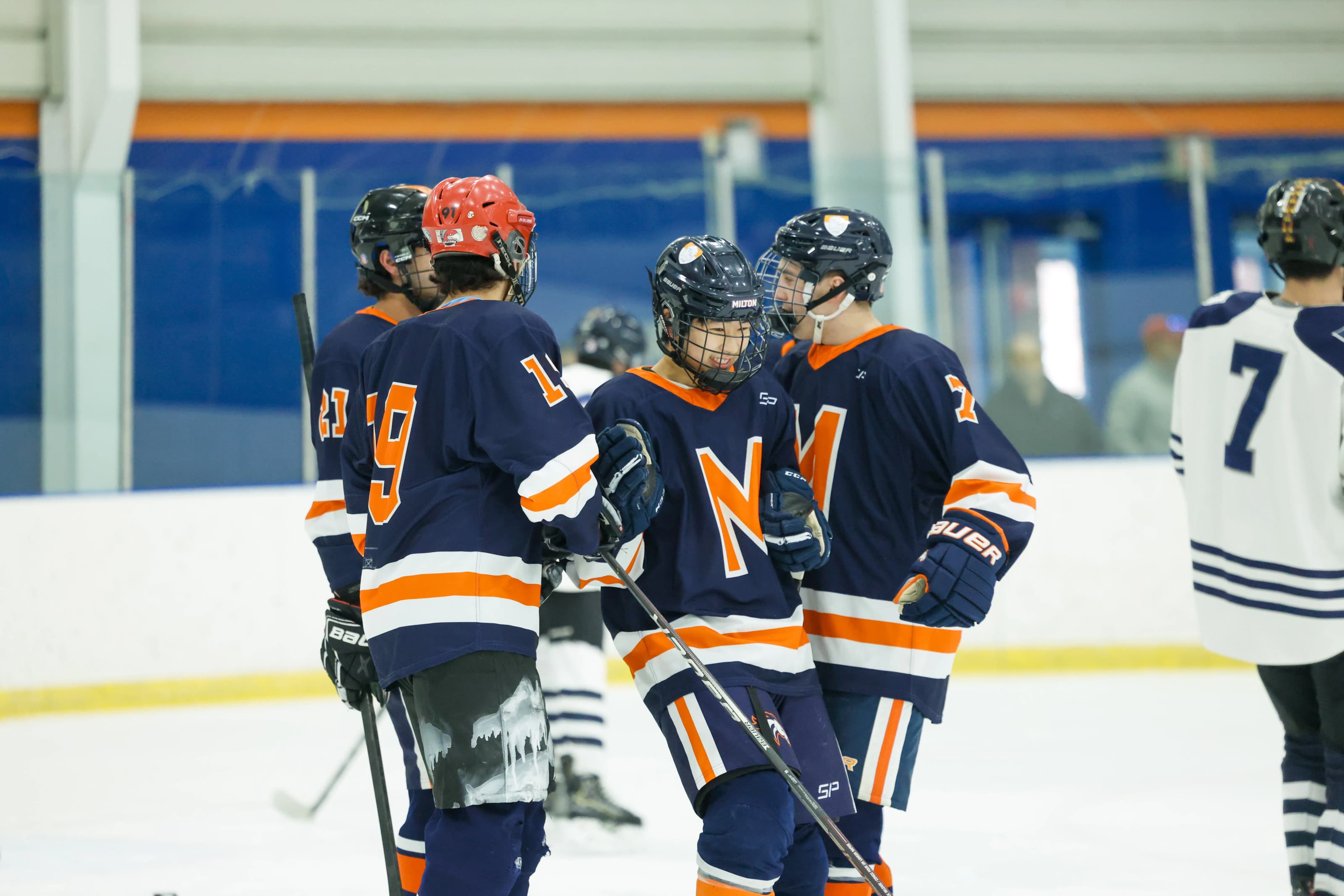
The sole addition of the word “junior” before “varsity” can vastly change a student's athletic experience. Whether it is basketball, soccer, or even swimming, a gap exists between the resources provided, the support, and the overall treatment each team receives.
From JV Field Hockey, Zoe Druker ’29 comments on the separation she feels between the two teams. On one hand, she believes that both teams receive “equal [amounts] of coaching, and the team culture on both teams is really nice.” However, Druker mentions that “JV gets a lot fewer resources than Varsity.” For example, Varsity always practices on the turf field while JV practices on grass fields. Unlike turf fields, these grass fields require constant maintenance. Otherwise, with wet or tall grass, practice becomes unnecessarily difficult for the JV Field Hockey team. Given this, Druker argues that, to a certain extent, these differences are justified because “Varsity plays to higher standards and expectations that are better served practicing with better equipment and locations.” She also believes this gap could still be minimized if the two teams shared their resources differently.
On the other hand, Emmett Burghardt ’27, a varsity athlete in sailing, skiing, and cross country, believes that there are no “noticeable differences in treatment [between JV and Varsity teams] except for experience in coaching.” This disparity, as Burghardt argues, is justified: “If athletes come to Milton for sports, they should be given the appropriate resources to excel in their sport.” He elaborates further, “If money or time [were] no object, [then] varsity and JV should have equal funding, but it makes sense to defer resources to the varsity athletes who are better equipped to handle them.” Athletics Department Director Lamar Reddicks did not respond to requests for comment on the issue of the financial divide between Varsity and JV teams at the time of publication.
By comparison to Burghardt’s point, Madeleine Stuart ’29 does not believe this imbalance is justified: “The top person on JV is almost the same as the bottom person on varsity, but they won't be treated similarly whatsoever.” Stuart points out differences that contrast with Druker’s opinion. Instead of resources, Stuart mentions that the JV team "[receives] significantly less coaching, lacks community, and practices less.” She emphasizes that JV teams also lack the support and expectations they receive compared with the varsity team.
Jocelyn Riordan ’27 reiterates this claim, stating that “the difference in coaching is vast as JV sports sometimes have coaches who have barely, or even never, played the sport, which can make the teams feel illegitimate.” She adds that inexperience in coaching can make JV players “feel like the coach is not actually committed to the team or qualified to coach.” This coaching gap between JV and Varsity teams can make it significantly harder to improve and earn a spot on Varsity.
This gap raises the question of the appearance of “recruiting culture” at the school, which can frequently widen the difference in skill level between JV and Varsity teams and, therefore, the gap between them. Milton Academy does not officially recruit student athletes. However, the admissions process considers a student’s athletic ability, as mentioned in Shira Keitner ’27’s article “Statistics Reveal Gender Inequities in Milton Athletics.” As such, in this article, the term “recruit” will represent students who, while not formally recruited, felt they had been identified for their athletic ability while applying to Milton.
Considering a gap other than resources, Mia Gao ’28, a JV Girls’ Soccer player, comments on the result of apparent recruits’ influence on Varsity team practices: “Since recruits take their sport very seriously, Varsity teams are overall more intense and require time and energy outside of designated practice times.”
However, beyond practice intensity, the addition of apparent recruits can also be seen as affecting the opportunities of other players, creating a sense of devaluation for less-experienced players once held against the standards of seasoned athletes.
Alex Sherman ’27, a Cross Country and track runner, mentions, “Recruiting decreases accessibility to sports…because people are discouraged from attempting to improve at the sport because making varsity is so difficult.”
Kiony Rivas ’27, who is on JV Boys’ Baseball, reflects a similar idea. While unsure about the explicit existence of “recruit culture,” he does believe that a recent “spike in recruiting” has caused “JV players to give up on Varsity dreams.”
Riordan also mentions that “as a generation we are becoming more achievement focused instead of experience focused. People are less willing to do things [like JV sports] if the things won’t contribute to their future or get them into college.”
The question of whether or not “recruit culture” appears within the Milton community still remains unclear. While some athletes confidently believe that a “recruit culture” exists in Milton, many more are unsure. Ultimately, from the perspective of either varsity or JV, both teams believe a divide between them is certain, shaped by differences in resources, expectations, and support. And while these disparities can be justified, their impact on an athlete’s experience remains undeniable.