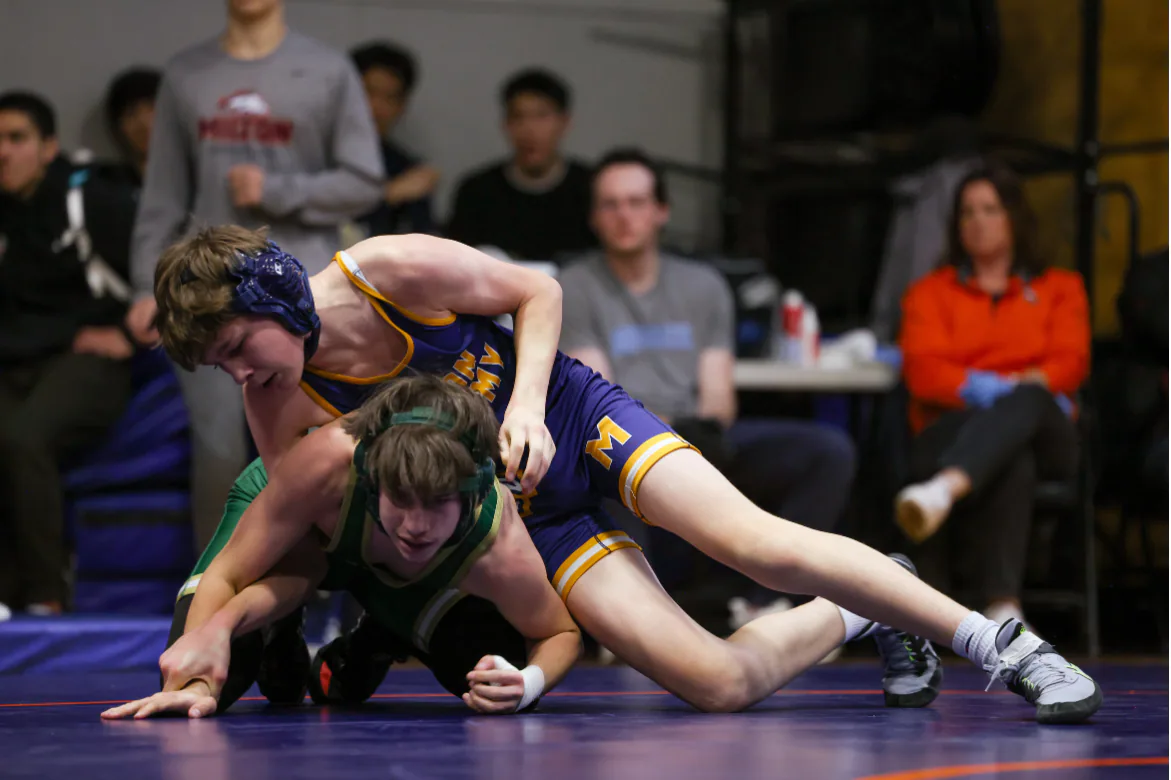
The wrestling team vaulted from “eleventh in the league last year to fifth in the league this year,” noted captain Lukas Caggiano ‘26. How did this team jump six places in a year? According to another team member, Toby Heikka ‘28, a major improvement for the team has been “recruiting more people.” Heikka explained that with more variety in practice partners, “you can grow in different ways, and that's been key.” Jeremiah Mathis ‘26 cited “strong fundamentals and consistent practice” as a vital part of their growth, allowing the team to build up significant momentum this year.
In addition to strong recruitment and wrestlers' dedication, many attribute their success to excellent coaching. Namely, students mention the arrival of wrestling coach and facilities manager Kahn Chace two years ago as a major turning point for the team. Chace continues to foster “this super supportive environment that has been conducive to our success in the past years,” according to Caggiano. Referring to their substantial improvement, Caggiano added, “he's definitely been the battery behind that switch.” Captain Cattien Huynh ‘26 also credited Kahn for their successful recruitment, commenting on “his ability to attract and retain talent.” Huynh continued, “he’s created an enjoyable and rewarding culture.”
Along with being a crucial part of recruiting, Kahn also creates a supportive practice environment. Although practices can be challenging, they are not seen as a necessary evil needed for improvement; rather, wrestlers enjoy showing up. Huynh illustrated the radical change: “In the ten minutes before our warmup jog during years past, the wrestlers would lie on the mat, silent, isolated from others in an air of complete silence. Now, chatter and laughter are always echoing the room.” Of the many exercises implemented in team practices, highlights include a warm-up incorporating gymnastics, partner drills, an instructional segment, and finally a period of dynamic wrestling practice. Caggiano concluded, “we have a fun time at practice. It's not overly grueling, but we get our conditioning done. We have all the ingredients that it takes to be a successful team.”
Many wrestlers mention the meet atmosphere as a highlight of being on the team. Milton teammates are consistently energetic, loud, and supportive. Heikka described the meets as “ecstatic,” adding, “once we start wrestling, everyone's always high energy.” Similarly, wrestler Sebastian Westphal ‘27, who recently came in first place for his weight class at Northern New England’s, described the meet environment as “electric,” continuing, “you’re nervous, but you’re also excited.” While team spirit is highest when wrestlers win, Mathis noted that, “We celebrate wins really loudly, but when someone loses, we’re just as supportive—there’s always something to learn, no matter the outcome.” Since individual losses are not detrimental to the rest of the team, competitive tension between teammates is minimized. The environment is productive and focused on collective growth. In all elements of wrestling, the theme of camaraderie is demonstrated unfailingly.
Commenting on the co-ed nature of the team, Caggiano remarked, “It’s a brotherhood, and a sisterhood, too,” adding, “everybody knows who can beat up everybody else, so there’s no chauvinistic ego.” Despite being an individual sport, wrestlers note surprisingly strong bonds with their teammates. Much of this is due to the close-contact nature of daily practices, which quickly breaks down social barriers. Moreover, the shared challenge of wrestling is commonly noted among wrestlers as a bonding mechanism. “Wrestlers support each other just by going through the same experience together,” as indicated by Caggiano, who continues, “there's the wrestling element, which is hard, and then there's cutting weight, which is another challenge.” Overall, the team has grown not just as wrestlers, but also as a community, with team culture continuing to shape the wrestling experience. Even in individual success, wrestlers like Westphal still indicated the profound role of their team: “We’re all in it together.”