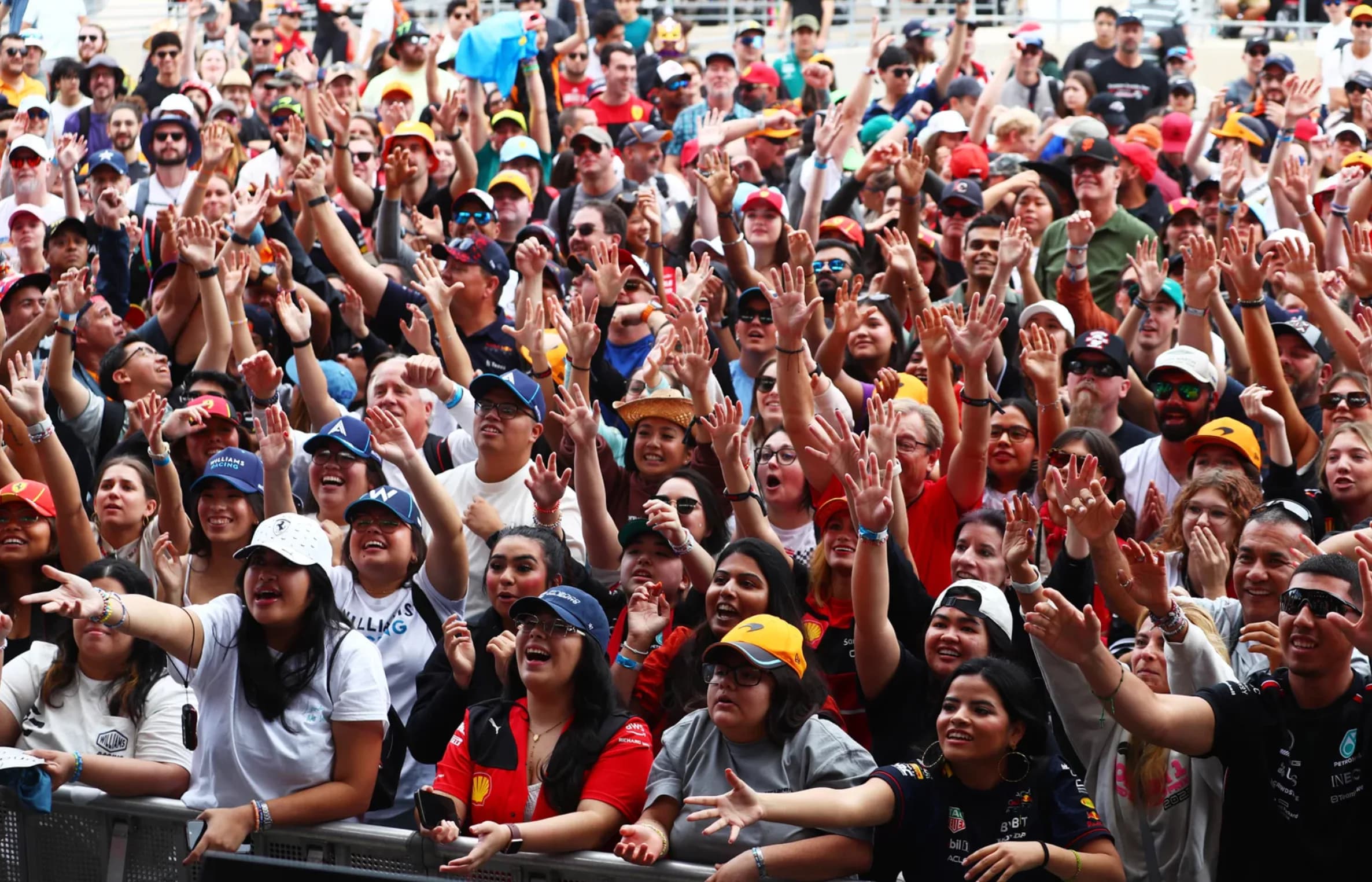
Despite F1’s 76-year history, the fanbase for the sport has grown 63% since 2018, with its demographic skewing to a younger audience. More than half of new fans in 2026 are under 35, and the fan composition is now more gender-balanced, with 42% of the fanbase being female. The F1 fanbase in Milton Academy’s own campus reflects these same trends; Gabi Ramos ’28 and Dylan Chu ’29 both joined the fanbase at the same time during middle school about five years ago.
This sport drew students in with its strong sense of community. Ramos loves “cheering not only for [her] favorite drivers, but for [her] favorite cars.” She elaborated, “as someone who’s interested in engineering, I believe it’s cool you get to cheer for both the car and the person.” “Every Sunday [F1] builds a community [around these interests],” she continued. Evelyn Landis-Arnold ’30, someone who wouldn’t “consider herself a fan,” still “think[s] it is amazing how much people come together to watch [races] and how much it means to them.” Chu, in addition to finding the sport “interesting [when] reading about the drivers and their experiences,” focuses on “the interactions between drivers and teams.”
The sport’s marketing fuels and builds the fanbase; in addition to the constant stream of Instagram posts and fan edits, more than 25 documentaries and movies have aired. Sage Kramer ’29, part of the fanbase, felt that the movies, “Didn’t really change [her opinion on the sport] because the people that were watching the movie already watch F1.” Chu disagreed, stating “I joined the fanbase after watching the Netflix documentary.” Chu and Kramer may contradict each other, but together they demonstrate that the TV productions are entertaining for established fans and new fans alike. Chu explained that he watched an “interesting kind of documentary [that follows] drivers, each across the course of the season,” and that the film caused him to pay closer attention to the strategy involved in the races.
As the sport grows in the modern age, the fanbase balanced out its gender ratio. The increase in female representation in the fanbase mostly stems from the new generation; the Motorsport Network reported that “nearly half of Gen Z respondents are women.” When asked if she felt unrepresented in the fanbase, Ramos answered, “No. Lately, the amount of female fans has increased and even some of my friends have become fans.” Landis-Arnold added she does not think that the fanbase is male-dominated: “From what I know, it seems the fanbase is very representative of all genders.” Although the female aspect in the fanbase grows each day, the representation in the league itself has become slim. Women do occupy many of the crew and backstage positions involved in F1 racing, but out of the 22 current races, none of the drivers are women.