The U.S. Open has always been more than a tennis tournament in my family. My great-grandmother always displayed, in her kitchen, a framed photo of 286-week No.1 ranked World Tennis champion Pete Sampras during the finals. My father journeyed every year to Flushing Meadows with his parents, and my great-grandfather took my mother to cheer for Pete Sampras on the day before she started college. My parents have celebrated more than twenty wedding anniversaries watching the finals at home.
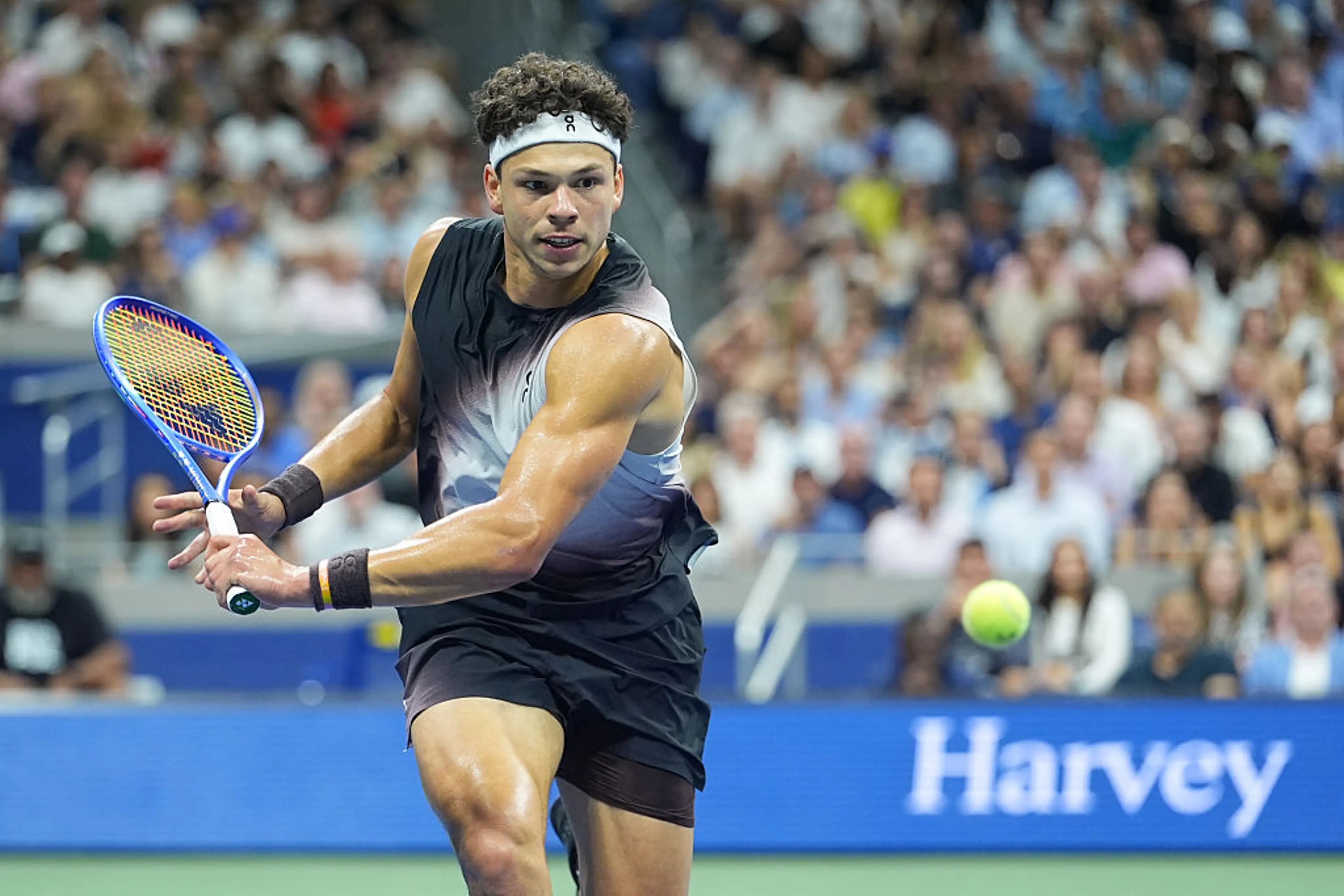
But this year, our family tradition had the potential to intersect with American tennis history. With Ben Shelton in contention, an American man had the chance to become the U.S. Open champion for the first time since 2003, a twenty-three-year drought and twenty-four years after Pete Sampras won his final title. Could an American man finally bring the title home again? Unfortunately, this year was not the year.
On the men’s side, America came close to ending this drought two years ago. In 2024, Taylor Fritz became the first American man since Andy Roddick in 2006 to reach the U.S. Open final, but the potential triumph ended in embarrassing fashion when Fritz lost in straight sets to Jannik Sinner.
This year, Ben Shelton gave the Americans another shot to break the drought. Shelton played an extremely strong tournament, including a nearly five-hour battle against tournament favorite Carlos Alcaraz, which concluded at 3:33 a.m., the latest finish time in tournament history. After his quarterfinal win, Shelton defeated Frances Tiafoe in an all-American semifinal to advance to the tournament final. In the finals, Shelton faced Alexander Zverev of Germany. Zverev quickly dominated the match, winning the first set 6-3 and overpowering Shelton in the second set with a 7-2 tiebreak. Shelton, however, did not back down, fighting in the third set to win 7-5 and forcing an additional fourth set. However, Zverev redirected the match to his intended course in the fourth set, as he battered Shelton 6-2 to claim the championship. With the victory, Zverev earned the tournament’s $5.5 million purse, the largest in tournament history. With Shelton's loss, the American drought will continue for at least one more year.
While Americans have historically struggled on the men’s side, that tale does not transfer to the women’s bracket. American women have previously dominated in the U.S. Open, with players such as Serena Williams, Venus Williams, and recently Coco Gauff. Since Gauff won the tournament in 2023, no other American women have matched her. Both Jessica Pegula in 2024 and Amanda Anisimova in 2025 reached the final of the championship, but neither player was able to win the final match. This year, American women once again made deep runs into the tournament, yet the title still remained out of reach, with the two American women who advanced into the semifinals being eliminated.
The women’s final featured the tournament’s top two seeds, with Elena Rybakina facing Aryna Sabalenka. Rybakina ultimately prevailed, winning in three sets, 6-4, 5-7, 6-2. After Sabalenka fought back in the second set, Rybakina regained control of the match in the third set, forcing the match to an end. With the victory, Rybakina won the same $5.5 million purse as Zverev did, continuing the U.S.Open’s equal prize money across both men and women. While the American women's drought is twenty years shorter than the men's, their drought still proves significant, considering American women’s dominance on the tour.
For now, American fans are left waiting on both the men's and women's sides of the draw for a champion to keep the trophy in America. For my family, our Pete Sampras portrait is back in the drawer, waiting for next year and hoping for a win.